What We Can Learn From Palm Trees

The Walk to Kalama Beach

One of my favorite beaches in the world is on the windward side of Oʻahu. You come down off the Pali Highway, drive through Kailua, take a left at the roundabout, and head toward Kalama Beach. It’s kind of tucked away. It’s not Kailua Beach Park, where everybody goes. It’s the same stretch of sand, just a little further down the road.

There are only about a dozen parking spots, but nine times out of ten I find one. If I have to wait, it’s not for long. You gather up your stuff and start walking in. At first the trees and foliage close in around you. There’s a spot to change and rinse off, and the branches block out most of the sky and the ocean.

But as you keep walking, it starts to open up. It’s like the aperture on a camera that’s been closed, and all of a sudden it opens in slow motion. There’s that vibrant blue sky. There’s that green and blue water. And right there in the foreground are these amazing palm trees, calling you to make that last 50 yards. Calling you to the white sand that feels like butter between your toes, the warm water, and the shade of those beautiful palms.

Standing under those palms, it’s easy to think of them as just part of the postcard. But those trees aren’t just pretty. They’re survivors. They bend in hurricane winds and stand back up. They drink from water you can’t see. They keep bearing fruit for decades. And long before anyone ever put a palm tree on a vacation brochure, God chose this very tree as a picture of the people who love Him.

Psalm 92:12 puts it plainly: “The righteous shall flourish like a palm tree, he shall grow like a cedar in Lebanon.” And the very first psalm in the book opens with a similar picture. The person who delights in God’s Word “shall be like a tree planted by the rivers of water, that brings forth its fruit in its season, whose leaf also shall not wither” (Psalm 1:3).

I’ve read those verses for years. But I recently got curious and started reading about how palm trees actually work. What I found made those verses come alive in a whole new way. God didn’t pick this tree at random. Nearly everything about the way a palm is built tells us something about how He grows a faithful life.

The Palm the Psalmist Knew

The palm in Psalm 92 almost certainly wasn’t the coconut palm of a Hawaiian postcard. It was the date palm, Phoenix dactylifera, a tree people in the Middle East have cultivated for at least 5,000 years. In ancient Israel, date palms were everywhere. Jericho was nicknamed “the city of palm trees” (Deuteronomy 34:3). Deborah held court under a palm in the hill country of Ephraim (Judges 4:5). The name Tamar, carried by several women in Scripture, means “palm.”

This tree was more than scenery. It was a pantry, a lumberyard, and a hardware store all in one. Records from the Middle East list some 800 uses for the date palm, from building material and roof thatch to rope fiber. Its fronds made baskets, mats, and fans. Its fruit fed families and caravans crossing the desert.

So when an Israelite heard “the righteous shall flourish like the palm tree,” the picture wasn’t decorative. It was a picture of a life that’s useful, nourishing, and a blessing to everyone around it. And the palm showed up again at the most important moment in history: the crowds waved palm branches when Jesus rode into Jerusalem (John 12:13).

Roots That Find the Water

Here’s something that surprised me. The date palm grows in some of the driest places on earth, yet it’s a thirsty tree. So how does it thrive in the desert? It sends its roots down to water you can’t see from the surface.

Researchers studying a date palm farm in a Moroccan oasis found that during the hottest, driest months, with no irrigation at all, half of the palm’s water came straight from the groundwater below. The roots had reached as deep as 30 feet to tap the aquifer. On the surface the ground looks parched. Underneath, the palm is drinking.

That’s exactly the picture of Psalm 1. The blessed person is “planted by the rivers of water.” Notice the word planted. This tree didn’t just happen to sprout near a stream. Someone put it there on purpose. And notice where the psalm says that person’s strength comes from: “his delight is in the law of the LORD, and in His law he meditates day and night” (Psalm 1:2).

Even the Israelites in the wilderness learned this. After the bitter water at Marah, God led them to Elim, “where there were twelve wells of water and seventy palm trees” (Exodus 15:27). Where you find palms, you find water.

Desert travelers have known that for thousands of years. Spot a cluster of palms on the horizon and you’ve likely found an oasis. If the water isn’t on the surface, it’s down below in a well or an aquifer. There’s an old Arab saying that the date palm keeps its feet in water and its head in fire.

But here’s the part that really got me. A palm’s roots follow the water. Water it from the surface every day, like the palms around a resort with sprinklers, and its roots tend to stay shallow. Make it reach, and it sends them down deep. Those deep roots don’t make the tree taller. What they give it is staying power. When the surface dries up or the storm rolls in, the deep-rooted palm holds on.

I think God works in us the same way. The dry seasons we’d never choose are often the very things that push our roots deeper into Him.

The people around you may see dry ground in your life. A hard season. A diagnosis. A layoff. But if your roots go down deep into God’s Word and His presence, you’ve got a source that the drought can’t touch.

Bending Without Breaking

If you’ve ever watched hurricane footage, you’ve seen it. Oaks and pines snap and topple, while the palms bend nearly sideways and then stand back up when the wind passes. There’s a reason for that.

A palm isn’t built like an oak. It has no growth rings at all. Instead, its trunk is packed with tough fibers scattered all the way through, more like the strands of a steel cable than the rings of a log. A University of Florida researcher explains that these fibers snake through the trunk rather than running straight up and down, which gives the palm far more flexibility and resistance to breaking than a typical tree. Some palm trunks can bend about 45 degrees without snapping.

The roots help too. Instead of one big taproot, palms grow hundreds of fibrous roots that grip the soil like a net. When the storm pushes, the tree flexes. It doesn’t fight the wind; it rides it out.

That’s a picture of resilient faith. The righteous aren’t promised a storm-free life. Jesus said plainly, “In the world you will have tribulation; but be of good cheer, I have overcome the world” (John 16:33). Flourishing like a palm doesn’t mean you never bend. It means you don’t break. You may get bent low by grief, pressure, or disappointment, but when the wind dies down, by God’s grace, you’re still standing.

Growing From the Heart

Here’s another thing most of us never notice. A single-trunk palm has only one growing point, a bud tucked up at the very top of the tree where the new fronds come from. Gardeners sometimes call it the “heart.” An oak can lose a dozen limbs and keep growing from its other branches. A palm can’t. If that heart is destroyed, the tree eventually dies, no matter how healthy the trunk looks.

That’s why palm experts say it can take a while after a storm to know if a palm is truly recovering. You have to watch for new growth coming out of the center.

Scripture has a lot to say about guarding that center. “Keep your heart with all diligence, for out of it spring the issues of life” (Proverbs 4:23). God told Samuel that while people look on the outward appearance, “the LORD looks at the heart” (1 Samuel 16:7).

We can spend a lot of energy on the trunk, how things look from the outside. But real growth only comes from the heart. As parents and ministry leaders, that’s worth remembering. The goal isn’t kids who look good on the outside. It’s kids whose hearts are alive to God, because that’s where every new frond comes from.

Still Bearing Fruit in Old Age

Psalm 92 doesn’t stop at verse 12. It keeps going: “Those who are planted in the house of the LORD shall flourish in the courts of our God. They shall still bear fruit in old age; they shall be fresh and flourishing” (Psalm 92:13–14).

The date palm is a perfect fit for that promise. It’s a slow starter, usually taking five to eight years before it bears any fruit. But once it gets going, a mature female palm can produce somewhere around 100 to 300 pounds of dates a year. It doesn’t hit its peak until roughly 30 to 35 years old, and many keep producing for 60 to 80 years. With good care, a date palm can live past 100.

Think about that. The palm’s best years aren’t its early ones. Its most fruitful season comes after decades of steady, quiet growth.

And then there’s Methuselah. In the 1960s, archaeologists digging at Masada, Herod’s fortress above the Dead Sea, found a cache of ancient date seeds. Decades later, in 2005, Dr. Elaine Solowey planted one. It sprouted. Carbon dating confirmed the seed was about 2,000 years old, the oldest seed ever known to germinate. They named the tree Methuselah, after the oldest man in the Bible. The Judean date palm had been extinct for centuries, and here it was, alive again from a seed that existed in the days when the teachings of Jesus were first spreading.

You’re never too old, and it’s never too late, for God to bring life and fruit. The grandparent praying faithfully for grandkids, the retired Sunday school teacher who still shows up, the senior saint mentoring a young couple: that’s Psalm 92 in action.

Planted on Purpose

So what does it mean to flourish like a palm tree? Put it all together and you get a pretty clear picture. Deep roots that find living water when everything on the surface looks dry. A flexible strength that bends in the storm but doesn’t break. A guarded heart where all new growth begins. And a long, faithful life that keeps bearing fruit well into old age.

But here’s the key word in both psalms: planted. Psalm 1 says “planted by the rivers of water.” Psalm 92 says “planted in the house of the LORD.” Palms in the desert don’t drift around looking for water. They stay put and send their roots down.

For our families, that might look like a few simple things:

  • Stay planted in the Word. Read a psalm together at dinner or before bed. Psalms 1 and 92 are a great place to start.
  • Stay planted in the house of the Lord. Show up to church, even in the dry seasons. That’s where the roots grow deep.
  • Honor the older palms. Invite grandparents and senior saints to share how God has been faithful. Their fruit is meant to feed the next generation.
  • Prepare before the storm. Help your kids memorize a few verses now, so they have roots to hold onto when the winds come.

The next time you see a palm tree, whether it’s on a vacation postcard or in a movie scene, let it preach a little sermon to you. God is in the business of growing people who flourish, not because life is easy, but because they’re planted by the water.

Dave Almgren – FaithandFamilyflicks.com & Two Pastors, Popcorn and a Movie

Sources

Scripture taken from the New King James Version®. Copyright © 1982 by Thomas Nelson. Used by permission. All rights reserved.

Why Young Washington Is the Must-See Independence Day Movie of 2026

This is one of those rare film announcements that makes you stop, reflect — and get genuinely excited about what storytelling can do. Young Washington isn’t just another historical movie; it’s a bold, inspiring story about the early life of George Washington, coming to theaters July 4th weekend, 2026, right in time for America’s 250th birthday.

What makes this project truly special is the partnership between Wonder Project and Angel Studios — two companies committed to uplifting, meaningful cinema that resonates with families and communities across the country.

🎖️ A Story Rooted in Courage and Character

Young Washington explores a side of George Washington few of us have seen on the big screen — his formative years, before he became Commander-in-Chief and the first President of the United States. At 22 years old, Washington makes a choice that ignites the French and Indian War, forcing him to confront failure, grow in character, and discover the courage that would define his legacy.

This is more than a “founding father biopic.” It’s a story of resilience, leadership, and transformation — themes that resonate with audiences today, especially families, educators, and anyone looking for stories with depth and heart.

🎥 Meet the Team Behind the Film

The movie is directed by Jon Erwin, known for powerful films like Jesus Revolution and I Can Only Imagine, co-written by Erwin with Tom Provost and Diederik Hoogstraten, and produced alongside Chip Diggins.

Angel Studios, the distributor, is known for its grassroots approach to storytelling — driven by a community of more than 1.5 million members who champion stories that “amplify light to mainstream audiences.”

On the Wonder Project side, the collaboration reflects their mission to entertain the world with courageous stories that inspire hope and restore faith in things worth believing in.

🎭 A Cast Bringing History to Life

The film’s cast includes rising star William Franklyn-Miller as Young George Washington, joined by memorable talents like Mary-Louise Parker, Kelsey Grammer, Andy Serkis, and Sir Ben Kingsley. These actors bring depth and gravitas to the story, ensuring this isn’t just educational — it’s emotionally engaging and cinematic in scale.

🎟️ A New Model for Fan Engagement

In a bold and unprecedented move, tickets for Young Washington went on sale a full year before its theatrical release — even before filming began. This early ticket availability isn’t just about reserving a seat; it’s a way for audiences to show theaters and the industry that there is real demand for thoughtful, values-driven films that celebrate history and human character.

Angel’s ticketing platform even lets fans change the date and time of their ticket closer to release — giving flexibility and empowering early supporters.

📅 Mark Your Calendar

Young Washington opens in theaters over Independence Day Weekend, 2026 — a cinematic holiday celebration timed with America’s 250th anniversary. This film is poised not just to entertain, but to spark conversation in homes, classrooms, and church communities across the nation.


As someone passionate about faith, family, and films that uplift, Young Washington feels like more than a movie — it’s a cultural moment. Makes plans to experience Young Washington in theaters July 4th, 2026 – Click this link for details on how to purchase tickets early.

David Almgren – Two Pastors, Popcorn and a Movie Podcast

Nate is releasing a new movie . . .

I just watched the trailer for The Breadwinner, and I love it. I honestly don’t think I’ve laughed this much watching a movie trailer in recent memory. From the very first moments, it delivers big, relatable laughs—and if the trailer is any indication, this film is going to be a lot of fun. I’m genuinely looking forward to seeing The Breadwinner in theaters.

That excitement is well-earned, because The Breadwinner stars record-breaking stand-up comedian Nate Bargatze in his first-ever feature film role. Known for his clean, relatable humor and down-to-earth storytelling, Bargatze brings that same authenticity to the big screen in a family comedy many parents will instantly recognize.

Screenshot

A Role Reversal with Real Stakes

In The Breadwinner, Bargatze plays Nate Wilcox, a devoted husband and lifelong provider who has always defined his role by working hard to support his family. But when his wife Katie (played by Mandy Moore) lands a once-in-a-lifetime business deal on Shark Tank, everything changes.

Katie’s success sends her on an extended business trip, leaving Nate at home—full-time—with their three young daughters.

What seems manageable at first quickly becomes overwhelming.

Parenting Is No Punchline

With little experience handling the day-to-day rhythms of parenting, Nate is thrown into the deep end of school schedules, emotional moments, household chaos, and the nonstop demands of raising kids. As the misadventures pile up, Nate learns what countless parents already know: running a household may be the toughest gig there is.

The comedy flows naturally from the situations, but the heart of the story is about growth, humility, and learning to value the unseen work that holds a family together.

Why The Breadwinner Resonates

At its core, The Breadwinner isn’t just about laughs—it’s about family, partnership, and redefining what it means to provide. The film explores:

  • The challenges and dignity of stay-at-home parenting
  • Mutual respect between spouses
  • The importance of teamwork in marriage
  • Finding purpose beyond traditional roles

These themes make The Breadwinner especially meaningful for families looking for entertainment that reflects real life—with humor and heart.

A Comedy for the Whole Family

With Nate Bargatze’s signature clean comedy and Mandy Moore’s warmth and strength, The Breadwinner promises to be a refreshing, family-friendly film that parents and kids can enjoy together.

Sometimes the biggest lessons come when life flips the script—and reminds us that love, sacrifice, and faithfulness at home matter more than any title or paycheck.

The Breadwinner is one to watch—and one I can’t wait to see on the big screen.

Dave Almgren – Two Pastors, Popcorn and a Movie Podcast

What I Didn’t Expect to Find in Man vs. Baby

When people sit down to watch a Rowan Atkinson comedy, they expect slapstick, chaos, and wonderfully awkward moments. Netflix’s Man vs. Baby certainly delivers all of that—but on a closer look, the series also holds surprising Christian themes woven beneath the humor.

While the premise is simple—a man unexpectedly caring for a baby faces escalating challenges—the show uses its comedic structure to highlight deeper truths about compassion, humility, and redemption.


1. Caring for Others: A Modern Parable of Compassion

Throughout the series, Trevor (Rowan Atkinson) repeatedly tries—though imperfectly—to do what is right. Even when everything spirals out of control, his intentions remain rooted in care, especially for the vulnerable child placed in his hands.

This reflects a deeply Christian principle: love is demonstrated not through perfection but through self-giving compassion, especially toward those who cannot repay us. Trevor’s clumsy, heartfelt efforts mirror the biblical call to care for “the least of these.”


2. Hospitality: Welcoming Strangers From the Cold

Another meaningful theme in the show is hospitality. Despite his own struggles, Trevor repeatedly chooses generosity:

  • inviting strangers inside
  • offering warmth and food
  • showing care even when it inconveniences him

These moments echo Scripture’s teachings on welcoming the stranger, reminding viewers that hospitality is a holy act—an outward sign of inward kindness.


3. The Nativity-Like Climax: How the True Meaning of Christmas Shines Through

The closing scene of Man vs. Baby—featuring a life-size nativity—is far more than a comedic flourish. It becomes the emotional and spiritual anchor of the series.

At its core, the true meaning of Christmas is this:

  • God entering the world in humility
  • hope arriving through a child
  • light breaking into ordinary, messy life
  • love choosing vulnerability

The nativity scene in the finale captures these themes beautifully. Trevor, exhausted and humbled, stands amid figures representing Mary, Joseph, and the newborn Jesus—a symbolic reminder that grace often comes in the middle of chaos, not in spite of it.

Here, the comedy of the series gives way to a moment of stillness and reflection. The baby he has spent the entire show trying to protect suddenly becomes a symbol of the very heart of Christmas: that every life has value, that love shows up quietly, and that redemption often begins in the simplest acts of care.

This visual parallel doesn’t just conclude the story—it re-frames it.
The series becomes a modern parable about how unexpectedly holy the everyday moments of compassion can be.


4. Comedy as a Vessel for Spiritual Reflection

What makes Man vs. Baby so effective is that it doesn’t preach. Instead, it uses humor to explore:

  • how compassion grows through trial
  • how humility leads to transformation
  • how caring for others—even clumsily—reflects divine love

In the end, comedy becomes a bridge to spiritual truth.


Conclusion: A Lighthearted Story With a Christmas Heart

Man vs. Baby may look like a simple comedic series about a man caring for a baby in chaotic circumstances, but beneath the laughter lies a tender moral core. Themes of care, hospitality, humility, and redemption shape the story, culminating in a finale that quietly but clearly points to the true meaning of Christmas.

In the life-size nativity scene, the show reminds us that grace often appears in the most unexpected places—and sometimes, as Trevor learns, caring for someone small and fragile can reveal the deepest truths of the season. Man vs. Baby is playing NOW on Netflix.

David Almgren – Two Pastors, Popcorn and A Movie Podcast

Do Your Sheep Know Your Voice?

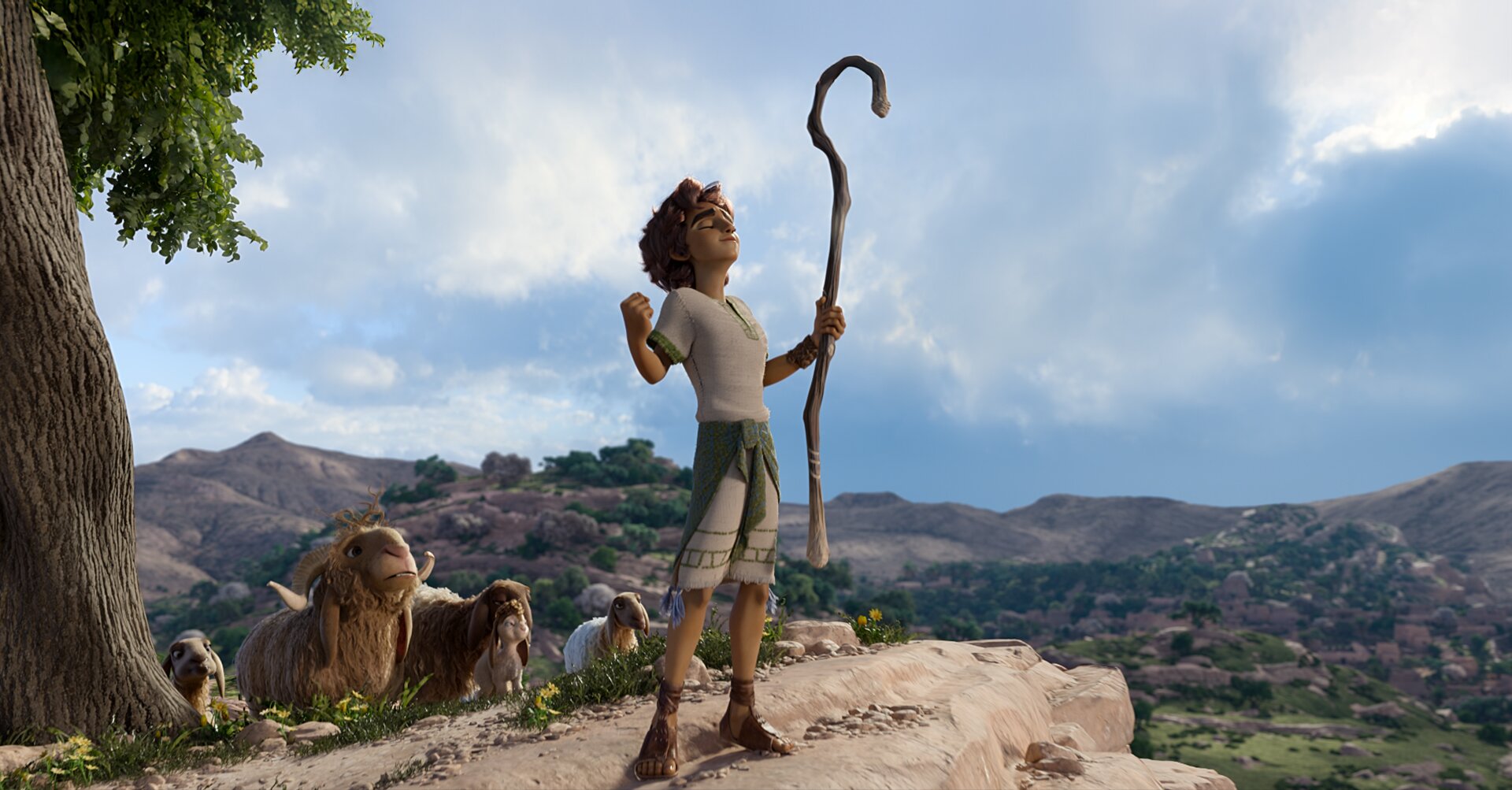
In the hills of Bethlehem, a young shepherd named David tended his father’s sheep. It may not have been the job he would have chosen for himself, long hours, isolation, and the constant threat of predators—but it was the role he was given. Commissioned by his father Jesse, David accepted his assignment with humility and diligence. In doing so, he revealed something powerful about leadership and care that still speaks to us today: a true shepherd knows his sheep, and his sheep know his voice.

David wasn’t just a caretaker; he was a guardian and a servant. Scripture paints a picture of a young man whose heart was fully engaged in the task before him. When one sheep strayed, David didn’t shrug it off as a minor loss, he went after it. He left the ninety-nine to rescue the one. That relentless pursuit reflects the very heart of God, who values every individual soul and never stops calling us home.

Imagine the moment when that lost sheep, frightened and alone, heard the familiar voice of its shepherd echo across the hillside. It wasn’t the voice of a stranger, it was the voice it trusted. The sheep recognized David’s call and followed it back to safety. That image beautifully captures the kind of connection every leader, pastor, and teacher should seek to build with those they lead.

But shepherding also teaches us something profound about how a leader leads.
A bad shepherd leads from behind, pushing and driving the sheep with pressure and fear. But a good shepherd leads from the front, guiding the flock with confidence, clarity, and presence. When the shepherd is in front, the sheep move forward not because they are forced to, but because they trust the one who is leading them.

And in ancient shepherding culture, young or inexperienced shepherds didn’t learn their role by textbooks or trial and error. A young apprentice shepherd would stay close to the seasoned shepherd, walking beside him day after day. The sheep would see the apprentice right next to the trusted shepherd and, over time, would come to recognize him as well. His authority didn’t come from a title or position, it came from proximity.
The same is true in ministry and leadership. Those who aspire to shepherd others well must spend time near those who already do. The flock learns to trust emerging leaders when they first see them walking in step with those they already know and follow.

As a former kids pastor, I’ve come to see how vital this principle is to ministry. Children, much like sheep, respond not only to what we say but to how well they know us. They listen to voices that are consistent, caring, and familiar. Developing that level of trust takes time, intentionality, and heart. It means showing up, staying engaged, and investing deeply in the lives of those God has placed under your care, and for new leaders, it means staying close enough to seasoned shepherds that children can see they are part of the same trusted team.

There’s another layer of shepherding that’s often overlooked. In ancient times, shepherds used oil to care for their sheep in a practical, protective way. During certain seasons, insects and parasites would attack a sheep’s head and burrow near its eyes and ears, causing irritation, infection, and even death. To protect them, the shepherd would pour oil over the sheep’s head, soothing their wounds and keeping pests away. This simple act of care not only protected the sheep’s health, it also brought them peace.

Spiritually speaking, this picture holds deep significance for anyone called to shepherd others, especially children and families. The “oil” represents the presence and anointing of the Holy Spirit, God’s healing and protective covering. When we take time to pray over our children, encourage their families, and create environments filled with God’s peace, we’re applying spiritual “oil.” We’re helping shield them from the distractions, lies, and “bugs” of this world that seek to cause harm or confusion.

Being a shepherd isn’t glamorous. It requires patience, vigilance, and compassion. It means standing between your flock and the forces that would harm them—whether those threats come in the form of spiritual distraction, discouragement, or doubt. But when your flock knows your voice, when they can sense your love and your faithfulness—they will follow you to safety and growth.

This December 19th, 2025, the animated movie David hits the big screen, offering a vivid and inspiring look at the young shepherd who would one day become Israel’s greatest king. It’s a story of courage, faith, and obedience, a reminder of what it means to lean into the assignments God gives us, even when they seem small or unseen.

As ministry leaders, parents, or mentors, we’re all shepherds in one way or another. We’re called to care for those entrusted to us, to know them by name, and to make our voices familiar and life-giving. And, like the apprentice shepherd, we are also called to learn from those ahead of us, so that in time, others may come to recognize our voice as well.

May we, like David, embrace our calling with humility and persistence.
May we lead from the front, not from behind.
May we walk beside seasoned shepherds as we grow.
May we continually anoint our flock with the oil of prayer, encouragement, and the Spirit’s presence. And may our “sheep” always recognize our voice, a voice that leads them safely home.

David Almgren – Two Pastors, Popcorn and a Movie Podcast


Faith Films. Fresh Stories. One Site.

🎬 Welcome to the New Faith and Family Films Hub — Your Home for All Things Faith-Based Entertainment!

Big news from Faith and Family Films News and Notes! We’ve launched our brand-new media website — faithandfamilyfilms.net

We’ve also brought together all of our favorite content under one roof, including the Two Pastors, Popcorn and a Movie podcast and Sharing Movies Worthy Reviews. Now, you can explore trusted movie reviews, our Faith and Family Films Blog, behind-the-scenes interviews with filmmakers and actors, red carpet moments, and even thoughtful discussions about the themes that make faith films so impactful.

Our goal is simple: to create a space where those who love faith-driven storytelling can discover, discuss, and celebrate inspiring movies and TV shows.

👉 Subscribe to our newsletter to stay informed and up to date on everything happening in Christian entertainment — from new series and feature films to exclusive interviews and previews.

And don’t forget to browse our growing library of movie trailers. You might just uncover a few hidden gems that deserve a second look.

Welcome to the new Faith and Family Films News and Notes— where stories of hope, redemption, and purpose shine on screen.

David Almgren – Faith and Family Films News and Notes

A New larryboy movie – Is it True?

Hey everyone! Big news for VeggieTales fans—especially those who love our favorite suction cup-eared superhero, LarryBoy! I heard that Big Idea Content Group announced a brand-new LARRYBOY theatrical movie coming soon! And according to IMDBPro, the title of the new movie is LarryBoy Begins. That’s right, It looks like LarryBoy is finally making his big-screen debut!

“VeggieTales has always been the gold standard for faith-based kids’ animation,” says Art Ayris. “And there’s no better way to bring that magic to theaters than putting LarryBoy and all those classic VeggieTales characters front and center again.”

The VeggieTales franchise is the most successful faith-based children’s series ever, with over $1.7 billion in retail sales. And Big Idea has already released two theatrical films—Jonah: A VeggieTales Movie back in 2002 and The Pirates Who Don’t Do Anything in 2008—earning over $39 million at the box office combined. This new LarryBoy Begins film will continue that legacy with the faith-friendly storytelling, wacky humor, and silly songs fans have come to love.

The cast features familiar voices, including Mike Nawrocki as Larryboy, Kirk Cameron as the Barber, and many others voices returning to bring new and old characters to life.

“LarryBoy is a fan favorite and who doesn’t love a superhero with plungers on the side of his head?” says Leslie Ferrell, SVP at Big Idea. “Fans have been asking for more, and now they’re finally going to get it. We’re excited to bring a movie the whole family can enjoy.”

While the plot is still under wraps, Producer Dan Merrell is leading the charge with a team of talented writers, ready to give LarryBoy his first big-screen adventure.

“I’ve loved LarryBoy for decades,” says Merrell. “I can’t wait for longtime fans and new audiences alike to experience a fresh VeggieTales film that honors the classics while delivering some fun surprises.”

🎙️ I am looking forward to seeing LarryBoy to swing into theaters in LarryBoy Begins, plungers and all! So Veggietales fans, be on the lookout for updates and a theatrical release date.

Plungers Away! Dave Almgren – Faith and Family Films News and Notes

Where Does Hope Grow?

In a heartwarming blend of faith, film, and fun, Two Pastors, Popcorn, and a Movie caught up with the creative force behind Where Hope Grows and its unforgettable star, David DeSanctis. What followed was a rich conversation full of laughter, insight, and soul—as they unpacked the movie’s powerful message, shared real-life reflections, and bonded over their mutual love for buttery popcorn and meaningful cinema. The movie hit the big screen a few years ago and is now currently streaming on Netflix. Check out our interview—you won’t want to miss it!

Message In Motion

What do Amiee Semple McPherson, Pine Wood Studios London, World Wide Pictures, the Salvation Army, hippies during the ‘Jesus Revolution,’ and the Erwin Brothers have in common? The answer: They have all utilized ‘the-media-of-the-day’ to reach the masses with the Gospel.

Aimee used ‘illustrated-sermons’ when she preached at Angelus Temple Foursquare Church.

In 1915 a missionary group noticed that the silent films of the day were not wholesome. So they countered by launching Pinewood Studios, London, to create family-friendly content.

Billy Graham made the Gospel come alive via World Wide Pictures. The Salvation Army, Australia, used film to present the Gospel.

During the ’60’s and ‘70’s the hippies of the Jesus Revolution used music and gospel tracks to communicate the love of God and the Gospel message.

The Erwin Brothers have produced motion pictures presenting stories of hope worldwide.

Film, especially motion pictures, is the most powerful ‘media-of-our-day’ for telling stories. And telling stories is a powerful way to communicate ‘Truth.’ There is nothing like a motion picture to engage the senses. We see life-like images on the screen. We hear the music, conversations and sound effects. We feel the emotional connection to the characters. It is a magical mixture that can drive the audience either in a positive or negative direction.

I have been in the faith and family film industry for more than a decade and can say unequivocally that film in the ‘faith space’ moves audiences toward hope and the Good News. This Movie Guy has seen a multitude of Pastors embolden their congregations to attend faith-based films and have seen positive and dramatic life responses. I encourage those of you who have not utilized this powerful tool to try this media-of-our-day very soon.

Movies produced by dedicated, Christian filmmakers like the Erwin’s, move audiences from contemplation and reflection to life-changing actions; films like: October Baby, where some expectant mothers walked out of the movie with changed minds, deciding to have their babies rather than seek an abortion. Mom’s Night Out reinforced that ‘the JOY of the Lord is our strength. Woodlawn brought a message of hope and salvation to high school football teams across the U.S.A. And I Can Only Imagine showed us the hope of Jesus Christ in the middle of tragedy.

Their new film, The Jesus Revolution, will arrive in theaters in February 2023. It’s a true story about the sea of young people who descended on Southern California in the ‘70’s, intent on redefining ‘Truth,’ through Rock and Roll, drugs and newfound love. But by a ‘twist-of-faith,’ the Jesus Revolution became the greatest spiritual awakening in American history and changed the world.

Maybe there are people in your community, Pastor, that desperately need to hear the Gospel. And it just might be presented via the ‘media-of-the-day,’ Faith-Based-Film!

Dave, the Movie Guy- Dave Almgren – FaithandFamilyFilms.info