The Walk to Kalama Beach
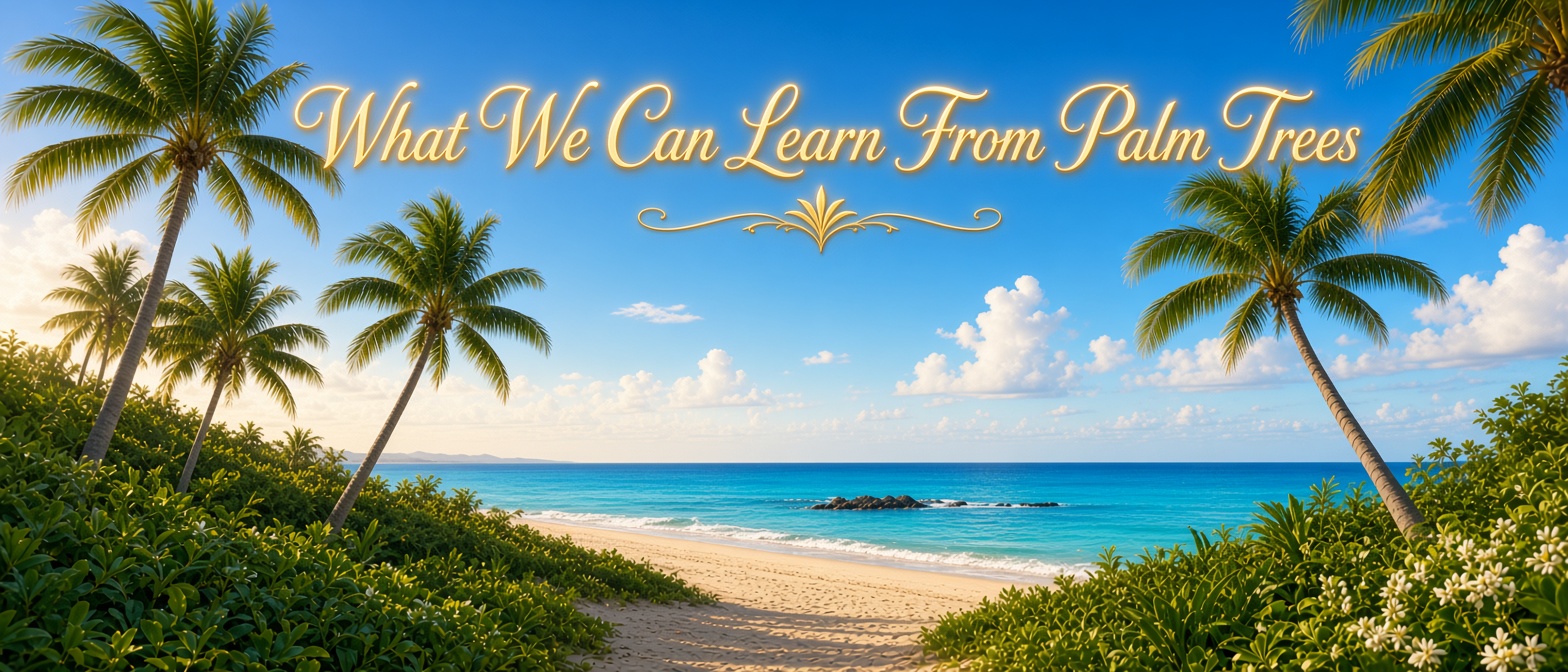
One of my favorite beaches in the world is on the windward side of Oʻahu. You come down off the Pali Highway, drive through Kailua, take a left at the roundabout, and head toward Kalama Beach. It’s kind of tucked away. It’s not Kailua Beach Park, where everybody goes. It’s the same stretch of sand, just a little further down the road.
There are only about a dozen parking spots, but nine times out of ten I find one. If I have to wait, it’s not for long. You gather up your stuff and start walking in. At first the trees and foliage close in around you. There’s a spot to change and rinse off, and the branches block out most of the sky and the ocean.
But as you keep walking, it starts to open up. It’s like the aperture on a camera that’s been closed, and all of a sudden it opens in slow motion. There’s that vibrant blue sky. There’s that green and blue water. And right there in the foreground are these amazing palm trees, calling you to make that last 50 yards. Calling you to the white sand that feels like butter between your toes, the warm water, and the shade of those beautiful palms.
Standing under those palms, it’s easy to think of them as just part of the postcard. But those trees aren’t just pretty. They’re survivors. They bend in hurricane winds and stand back up. They drink from water you can’t see. They keep bearing fruit for decades. And long before anyone ever put a palm tree on a vacation brochure, God chose this very tree as a picture of the people who love Him.
Psalm 92:12 puts it plainly: “The righteous shall flourish like a palm tree, he shall grow like a cedar in Lebanon.” And the very first psalm in the book opens with a similar picture. The person who delights in God’s Word “shall be like a tree planted by the rivers of water, that brings forth its fruit in its season, whose leaf also shall not wither” (Psalm 1:3).
I’ve read those verses for years. But I recently got curious and started reading about how palm trees actually work. What I found made those verses come alive in a whole new way. God didn’t pick this tree at random. Nearly everything about the way a palm is built tells us something about how He grows a faithful life.
The Palm the Psalmist Knew
The palm in Psalm 92 almost certainly wasn’t the coconut palm of a Hawaiian postcard. It was the date palm, Phoenix dactylifera, a tree people in the Middle East have cultivated for at least 5,000 years. In ancient Israel, date palms were everywhere. Jericho was nicknamed “the city of palm trees” (Deuteronomy 34:3). Deborah held court under a palm in the hill country of Ephraim (Judges 4:5). The name Tamar, carried by several women in Scripture, means “palm.”
This tree was more than scenery. It was a pantry, a lumberyard, and a hardware store all in one. Records from the Middle East list some 800 uses for the date palm, from building material and roof thatch to rope fiber. Its fronds made baskets, mats, and fans. Its fruit fed families and caravans crossing the desert.
So when an Israelite heard “the righteous shall flourish like the palm tree,” the picture wasn’t decorative. It was a picture of a life that’s useful, nourishing, and a blessing to everyone around it. And the palm showed up again at the most important moment in history: the crowds waved palm branches when Jesus rode into Jerusalem (John 12:13).
Roots That Find the Water
Here’s something that surprised me. The date palm grows in some of the driest places on earth, yet it’s a thirsty tree. So how does it thrive in the desert? It sends its roots down to water you can’t see from the surface.
Researchers studying a date palm farm in a Moroccan oasis found that during the hottest, driest months, with no irrigation at all, half of the palm’s water came straight from the groundwater below. The roots had reached as deep as 30 feet to tap the aquifer. On the surface the ground looks parched. Underneath, the palm is drinking.
That’s exactly the picture of Psalm 1. The blessed person is “planted by the rivers of water.” Notice the word planted. This tree didn’t just happen to sprout near a stream. Someone put it there on purpose. And notice where the psalm says that person’s strength comes from: “his delight is in the law of the LORD, and in His law he meditates day and night” (Psalm 1:2).
Even the Israelites in the wilderness learned this. After the bitter water at Marah, God led them to Elim, “where there were twelve wells of water and seventy palm trees” (Exodus 15:27). Where you find palms, you find water.
Desert travelers have known that for thousands of years. Spot a cluster of palms on the horizon and you’ve likely found an oasis. If the water isn’t on the surface, it’s down below in a well or an aquifer. There’s an old Arab saying that the date palm keeps its feet in water and its head in fire.
But here’s the part that really got me. A palm’s roots follow the water. Water it from the surface every day, like the palms around a resort with sprinklers, and its roots tend to stay shallow. Make it reach, and it sends them down deep. Those deep roots don’t make the tree taller. What they give it is staying power. When the surface dries up or the storm rolls in, the deep-rooted palm holds on.
I think God works in us the same way. The dry seasons we’d never choose are often the very things that push our roots deeper into Him.
The people around you may see dry ground in your life. A hard season. A diagnosis. A layoff. But if your roots go down deep into God’s Word and His presence, you’ve got a source that the drought can’t touch.
Bending Without Breaking
If you’ve ever watched hurricane footage, you’ve seen it. Oaks and pines snap and topple, while the palms bend nearly sideways and then stand back up when the wind passes. There’s a reason for that.
A palm isn’t built like an oak. It has no growth rings at all. Instead, its trunk is packed with tough fibers scattered all the way through, more like the strands of a steel cable than the rings of a log. A University of Florida researcher explains that these fibers snake through the trunk rather than running straight up and down, which gives the palm far more flexibility and resistance to breaking than a typical tree. Some palm trunks can bend about 45 degrees without snapping.
The roots help too. Instead of one big taproot, palms grow hundreds of fibrous roots that grip the soil like a net. When the storm pushes, the tree flexes. It doesn’t fight the wind; it rides it out.
That’s a picture of resilient faith. The righteous aren’t promised a storm-free life. Jesus said plainly, “In the world you will have tribulation; but be of good cheer, I have overcome the world” (John 16:33). Flourishing like a palm doesn’t mean you never bend. It means you don’t break. You may get bent low by grief, pressure, or disappointment, but when the wind dies down, by God’s grace, you’re still standing.
Growing From the Heart
Here’s another thing most of us never notice. A single-trunk palm has only one growing point, a bud tucked up at the very top of the tree where the new fronds come from. Gardeners sometimes call it the “heart.” An oak can lose a dozen limbs and keep growing from its other branches. A palm can’t. If that heart is destroyed, the tree eventually dies, no matter how healthy the trunk looks.
That’s why palm experts say it can take a while after a storm to know if a palm is truly recovering. You have to watch for new growth coming out of the center.
Scripture has a lot to say about guarding that center. “Keep your heart with all diligence, for out of it spring the issues of life” (Proverbs 4:23). God told Samuel that while people look on the outward appearance, “the LORD looks at the heart” (1 Samuel 16:7).
We can spend a lot of energy on the trunk, how things look from the outside. But real growth only comes from the heart. As parents and ministry leaders, that’s worth remembering. The goal isn’t kids who look good on the outside. It’s kids whose hearts are alive to God, because that’s where every new frond comes from.
Still Bearing Fruit in Old Age
Psalm 92 doesn’t stop at verse 12. It keeps going: “Those who are planted in the house of the LORD shall flourish in the courts of our God. They shall still bear fruit in old age; they shall be fresh and flourishing” (Psalm 92:13–14).
The date palm is a perfect fit for that promise. It’s a slow starter, usually taking five to eight years before it bears any fruit. But once it gets going, a mature female palm can produce somewhere around 100 to 300 pounds of dates a year. It doesn’t hit its peak until roughly 30 to 35 years old, and many keep producing for 60 to 80 years. With good care, a date palm can live past 100.
Think about that. The palm’s best years aren’t its early ones. Its most fruitful season comes after decades of steady, quiet growth.
And then there’s Methuselah. In the 1960s, archaeologists digging at Masada, Herod’s fortress above the Dead Sea, found a cache of ancient date seeds. Decades later, in 2005, Dr. Elaine Solowey planted one. It sprouted. Carbon dating confirmed the seed was about 2,000 years old, the oldest seed ever known to germinate. They named the tree Methuselah, after the oldest man in the Bible. The Judean date palm had been extinct for centuries, and here it was, alive again from a seed that existed in the days when the teachings of Jesus were first spreading.
You’re never too old, and it’s never too late, for God to bring life and fruit. The grandparent praying faithfully for grandkids, the retired Sunday school teacher who still shows up, the senior saint mentoring a young couple: that’s Psalm 92 in action.
Planted on Purpose
So what does it mean to flourish like a palm tree? Put it all together and you get a pretty clear picture. Deep roots that find living water when everything on the surface looks dry. A flexible strength that bends in the storm but doesn’t break. A guarded heart where all new growth begins. And a long, faithful life that keeps bearing fruit well into old age.
But here’s the key word in both psalms: planted. Psalm 1 says “planted by the rivers of water.” Psalm 92 says “planted in the house of the LORD.” Palms in the desert don’t drift around looking for water. They stay put and send their roots down.
For our families, that might look like a few simple things:
- Stay planted in the Word. Read a psalm together at dinner or before bed. Psalms 1 and 92 are a great place to start.
- Stay planted in the house of the Lord. Show up to church, even in the dry seasons. That’s where the roots grow deep.
- Honor the older palms. Invite grandparents and senior saints to share how God has been faithful. Their fruit is meant to feed the next generation.
- Prepare before the storm. Help your kids memorize a few verses now, so they have roots to hold onto when the winds come.
The next time you see a palm tree, whether it’s on a vacation postcard or in a movie scene, let it preach a little sermon to you. God is in the business of growing people who flourish, not because life is easy, but because they’re planted by the water.
Dave Almgren – FaithandFamilyflicks.com & Two Pastors, Popcorn and a Movie
Sources
- Contribution of groundwater to date palm water use in the oases, Cahiers Agricultures (2017)
- Palm tree survival after hurricanes, UF/IFAS (2024)
- How do palm trees survive hurricanes and cyclones?, Science ABC
- Swaying palms, KQED Perspectives
- Phoenix dactylifera, Naturalis useful plants database
- The date palm growth stages from seed to harvest, Biology Insights
- Date palm, Wikipedia
- The story of Methuselah, Arava Institute
- Date palm sprouted from 2,000-year-old seed, Tampa Bay Times (2008)
Scripture taken from the New King James Version®. Copyright © 1982 by Thomas Nelson. Used by permission. All rights reserved.