
A few years ago, I had the privilege of working on the marketing for A Beautiful Day in the Neighborhood, the Tom Hanks film about Fred Rogers. I loved working on that film.
But I’ll be honest. When I first sat down to watch it, I thought I knew what I was getting: a biopic about Fred Rogers’ life and the making of Mister Rogers’ Neighborhood. And that’s not really what it was.
It was a movie about a man who chose to make an impact through his actions, and about the impact he had on one journalist, Tom Junod (Lloyd Vogel in the film), who was reluctantly assigned to write about him. The story became less about Mister Rogers and more about what happens to a hurting, cynical man when someone simply chooses to be kind to him. I didn’t see that coming. I heard the same thing from so many others who watched it: “That was not what I expected.” But by the end, it was one of the most impactful stories I’ve seen on screen.
Working on that film also opened a door I never expected to walk through. I was invited to the red carpet premiere in Pittsburgh, Fred Rogers’ hometown, to celebrate the film’s opening. That trip became less about a movie and more about a man, and about the people whose lives he shaped.
Walking Into the Neighborhood
While I was in Pittsburgh, we got to visit WQED, the PBS station where Mister Rogers’ Neighborhood was filmed. If you grew up with Mister Rogers, you understand what that means. This was the place. This is where it all happened.
I walked into the studio and saw the painted floor, that cobblestone-colored path that led into the Neighborhood. I just stood there for a moment. Something so simple, a painted floor, and yet it carried decades of memories. Millions of children were invited into that space through a television screen, and here I was, standing in it.
We heard stories from people who worked with Fred. And over and over, the message was the same. People have always wondered, “Was he really like that?” The answer from the people who knew him best was a resounding yes. The man on TV was the man they knew. They were one and the same.
That matters. In a world where so many people have a public image and a private reality, Fred Rogers was consistent. What you saw was who he was.
Meeting Mr. McFeely
At the premiere, I sat right behind Mr. McFeely, David Newell, the Speedy Delivery man himself. Later I got to meet him in the lobby.
I have to be honest. Even now, thinking back on it, I get emotional. He was so kind. Gentle. A genuinely nice man. And listening to him tell stories about his life alongside Fred Rogers was something I’ll never forget. These weren’t stories about fame or ratings. They were stories about a friend, a man who cared deeply about children and about people.
It struck me that kindness is contagious. The people who spent years around Fred carried that same gentleness with them.

A Portrait Made of a Life
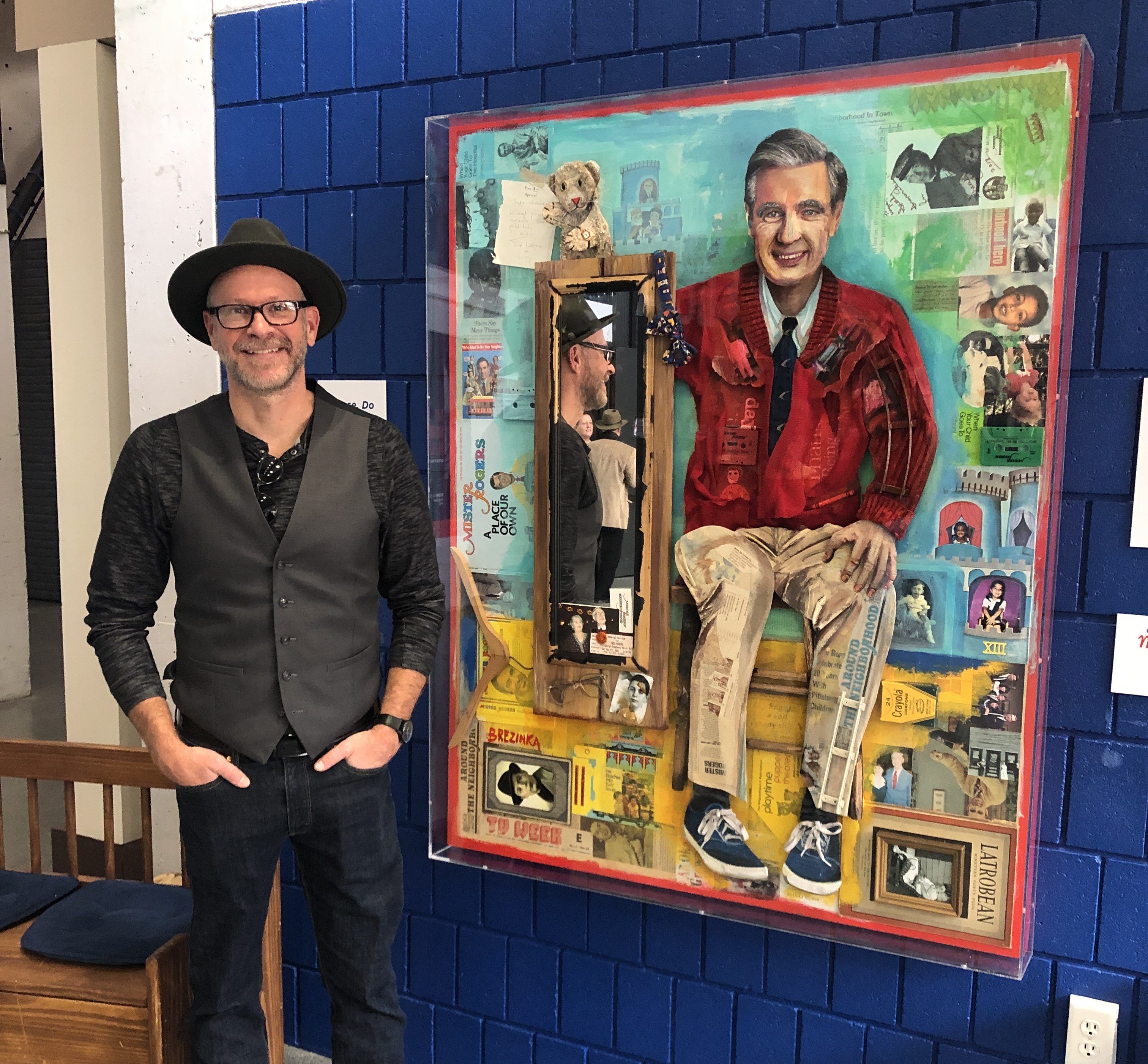
On that trip I also met Wayne Brezinka, a Nashville artist who created a remarkable piece called Mister Rogers: Just The Way You Are. It’s not just a painting. It’s a large mixed-media collage built from pieces of Fred’s life, including items from the Fred Rogers archive and from his wife, Joanne Rogers.
Standing in front of it, you realize the portrait is literally made of his life. Every piece tells part of the story. And isn’t that true of all of us? Our lives become a mosaic of the choices we make, the people we love, and the kindness we show along the way.
A Young Man Named Colton
One of the most inspiring people I met on that trip was a young man named Colton DeBiase. Colton started something called Live Like Fred with his mom. It wasn’t a big official organization. It was a grassroots idea: go around Pittsburgh, find “inspiring neighbors” who were carrying on Fred Rogers’ spirit of kindness, and tell their stories.
Colton was a college student when he started, interviewing ordinary people doing extraordinary acts of kindness. Teachers. Students. Neighbors. People simply choosing to love the people around them. He even had a Live Like Fred Kindness Bear that visited schools to share lessons on kindness. Today Colton is a play-by-play sportscaster in Pittsburgh, but the simple idea he started with his mom has stuck with me ever since.
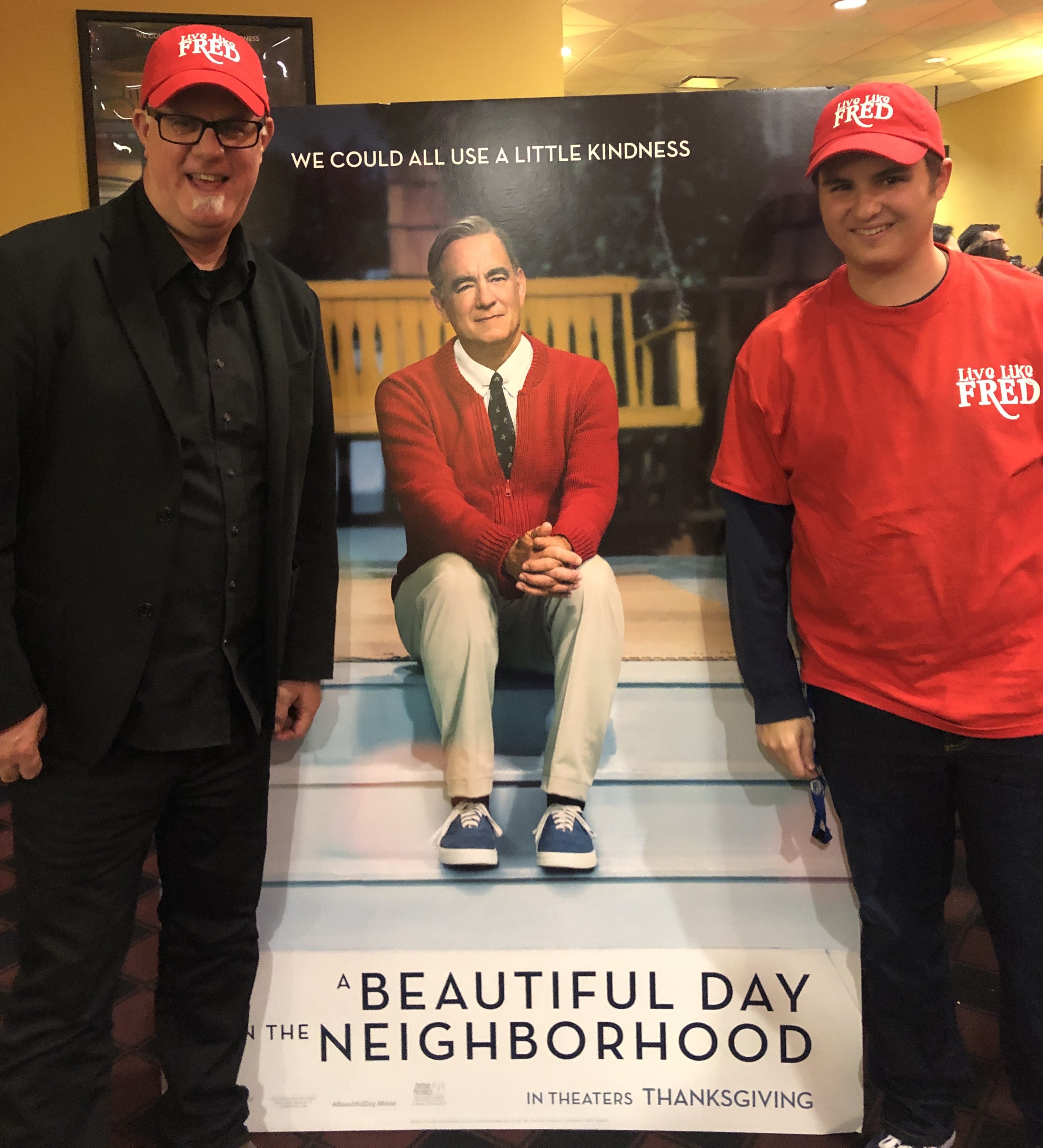
Live like Fred. Three words. A whole way of life.
The Moment in the Theater
Then there was that one scene.
Fred Rogers, played by Tom Hanks, is sitting in a restaurant with the journalist. Fred asks him to take a minute of silence, to think about the people who loved him into being.
And then Tom Hanks turns and looks right at the camera. He breaks the fourth wall. He’s looking at you, sitting in the theater.
The whole room went quiet. It was one of the most profound moments I’ve ever experienced in a movie theater. Even years after his death, you could feel Fred Rogers’ impact coming right through the screen. In that minute, everyone in the theater was thinking about someone who had loved them, shaped them, believed in them.
That’s the power of a life well lived. It keeps speaking long after the person is gone.
Simple, But Profound
When you look back at Mister Rogers’ Neighborhood, it was so simple. A man changing his shoes. Putting on a sweater. Feeding his fish. Talking slowly and looking right into the camera to tell a child, “You are special just the way you are.”
Simple. But profound.
Fred Rogers was an ordained Presbyterian minister, but he never had a pulpit in the traditional sense. His pulpit was a television studio, and his congregation was every child who tuned in. He truly wanted to live like Christ, to be kind, and to make an impact on the world. And he did, not through anything flashy, but through faithfulness, consistency, and love.
So, What Does It Mean to Live Like Fred?
Here’s my challenge to you. What would it look like for you to live like Fred this week?
- It might mean slowing down and really listening to someone, giving them your full attention the way Fred did.
- It might mean telling a child, or a grown-up for that matter, that they matter just the way they are.
- It might mean being the same person in private that you are in public.
- It might mean taking a minute of silence to thank God for the people who loved you into being, and then picking up the phone and telling one of them.
- And it might mean finding the inspiring neighbors in your own community and celebrating them, just like Colton and his mom did.
Jesus said the greatest commandments are to love God and love your neighbor. Fred Rogers spent his life showing us what that second part looks like, one neighbor at a time.
Won’t you be my neighbor?
Live like Fred.
Dave Almgren is the founder of FaithAndFamilyFlicks.com, Two Pastors, Popcorn and a Movie Podcast helping families and churches make media choices worth their time.