
A few nights ago, I encountered someone whose very presence was a story in itself: a man who is 104 years old, born in 1920. It’s remarkable to think about what this man has lived through. In over a century of life, his story has likely been shaped by historic changes, cultural shifts, and countless personal experiences. His existence sparked a larger contemplation for me—what is his story, and how has it shaped him?
This reflection extended to everyone I saw that night while walking through the park in Waikiki. People passed by, some sitting on the grass, others strolling along the pathways. Each person carried with them their own narrative. Did they grow up in Hawaii, or did they move here? What led them to this specific moment in time? Do they know Jesus? Their stories, though perhaps less known than those of public figures or historical icons, are no less significant. Every person’s life is a mosaic of experiences, decisions, and encounters, and in Hawaiian culture, storytelling plays a crucial role in recognizing this.
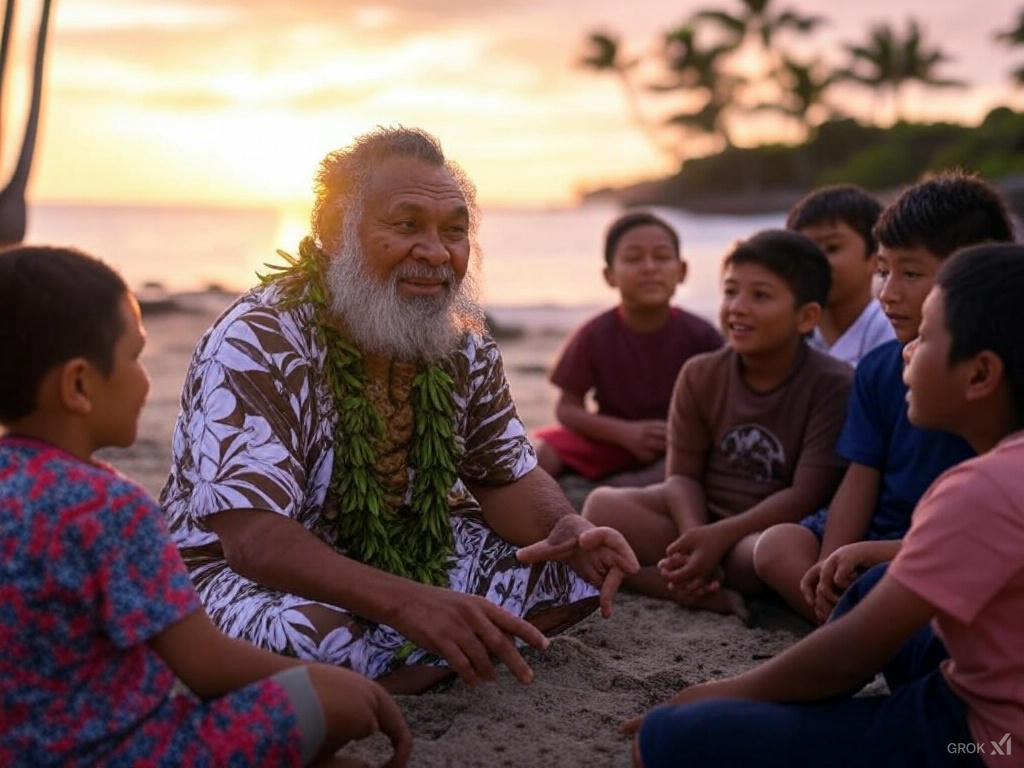
In traditional Hawaiian society, storytelling was an oral art form, passed down through generations in the form of “moʻolelo” (narratives) and chants. These stories weren’t just for entertainment; they were the primary way to preserve history, cultural practices, and moral lessons. Storytelling connected people to their ancestors and the land. While the medium of storytelling has expanded —from oral traditions to written word, to digital media —the core purpose remains the same: to communicate, to connect, and to remember.
Today, storytelling often takes place on the big screen. Films have become one of the most powerful mediums for sharing stories on a grand scale. True-to-life narratives, whether they depict historical events or personal struggles, have the ability to deeply move audiences. Films can evoke emotions, challenge perspectives, and inspire change. In many ways, they help individual stories become universal. The films we watch are not only entertainment—Movies like ‘The Best Christmas Pageant Ever’ or the soon to be released animated movies “David” and The King of Kings‘. They are reflections of human experience.
But what is it that makes certain stories land on the big screen? What elevates some narratives to global recognition while others remain untold? It’s worth considering that even though some stories get the spotlight, every narrative holds value. The elderly man in the park, the runner passing by, the quiet onlooker at the café —each story holds meaning. Yet, for some, the stage is larger, and their stories resonate more broadly.

However, it’s not the size of the audience that determines the value of a story—it’s the impact it has on those who hear it. In the realm of faith, storytelling also plays a central role. Churches have long been places where the greatest stories are shared—stories of hope, redemption, and transformation. The story of Christ is a narrative of profound significance, and the ways in which it’s communicated continue to evolve. Just as we use modern media to tell personal stories, we can also use these tools to share messages of faith.
Ultimately, stories are bridges. They connect us to others, allow us to understand different perspectives, and inspire us to think beyond ourselves. Whether told in a park, in a church, or on the big screen, stories have the power to make people feel heard, valued, and part of something larger.
Dave Almgren – The Movie Guy and Co Host of Two Pastors, Popcorn and a Movie Podcast.
 Faith and Family Flicks News and Notes