
Stay Focused. Keep Going. Finish Strong.

At seven o’clock on the evening of October 20, 1968, a few thousand spectators remained scattered across Mexico City’s Olympic Stadium. The air had turned cool and dark. The last of the marathon runners, spent and staggering, had long since been carried off to the medical tents. More than an hour earlier, Mamo Wolde of Ethiopia, the race’s eventual winner, looking remarkably fresh, had crossed the finish line to complete the 26-mile, 385-yard course. He was the reigning champion of the event, and he’d run like it.

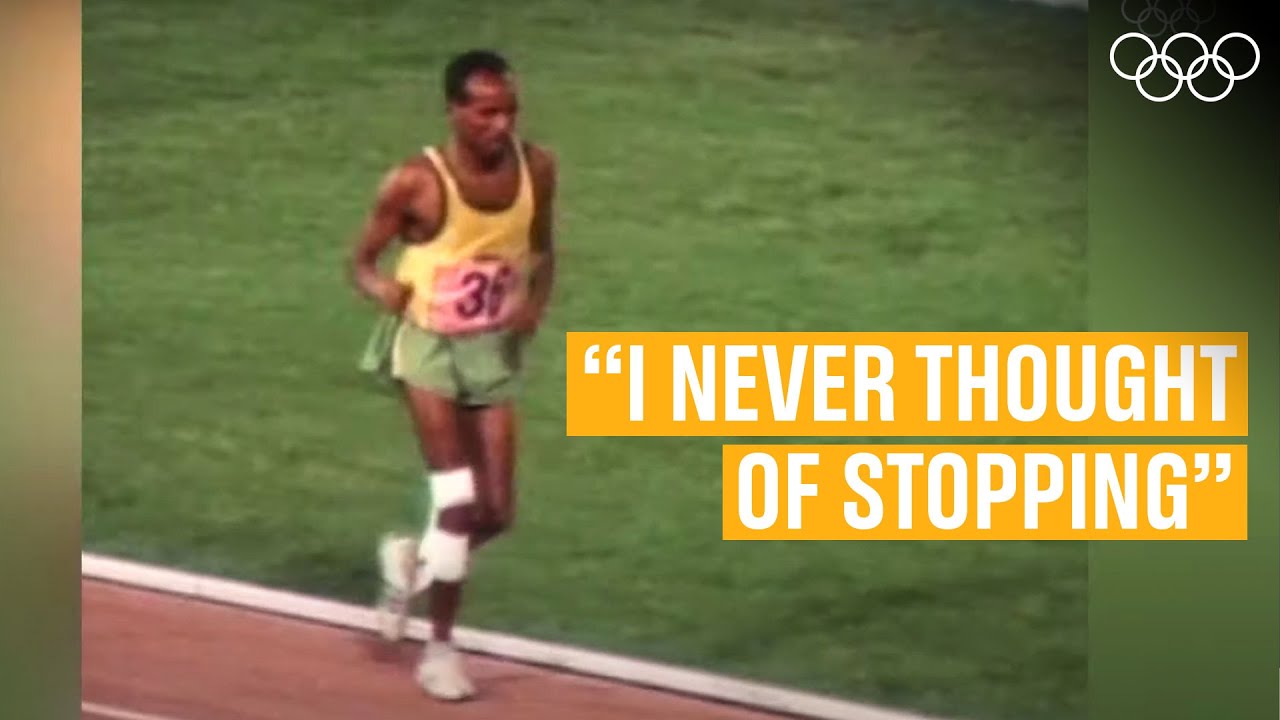
The medal ceremony was over. People were gathering their things to leave. Then, from beyond the stadium gate, came the sound of sirens and police whistles. Heads turned. A lone figure entered the stadium wearing the colors of Tanzania. His name was John Stephen Akhwari — himself the reigning African champion, no stranger to finishing near the front of a field. But tonight he was hobbling. Somewhere around the 19-kilometer mark, in the chaos of jostling runners, Akhwari had fallen hard, dislocating his knee and badly injuring his shoulder. Dehydrated, disoriented, his leg wrapped in a rough, bloodied bandage, he had gotten back up.

Of the 79 men who had started that marathon, only 17 would finish. Akhwari was determined to be one of them, even if it meant being the last.

He circled the final stretch of track in visible agony, grimacing with every step. The remaining spectators rose to their feet and cheered him as though he were crossing first, not last. When he finally reached the finish line, Akhwari didn’t stop to soak in the applause. He simply walked off the field.

Afterward, a reporter asked him the question everyone was thinking: given the injury, and with no chance of a medal, why hadn’t he just quit?

Akhwari’s answer has outlived the race itself: “My country did not send me 7,000 miles to start the race. They sent me 7,000 miles to finish the race.”

You were not put here just to start. You were put here to finish.

The Race Marked Out for Us

There’s a reason that answer still stops people in their tracks more than half a century later. It touches something true about the life of faith.

The writer of Hebrews uses this same image, a race, to describe what it means to follow Christ:

“Therefore, since we are surrounded by so great a cloud of witnesses, let us also lay aside every weight, and sin which clings so closely, and let us run with endurance the race that is set before us.” (Hebrews 12:1)

Notice what the verse doesn’t say. It doesn’t say “let us start the race.” Starting is the easy part. Nearly everyone starts. Seventy-nine men lined up in Mexico City that afternoon, and every one of them believed, at the starting gun, that they’d finish. The verse says run with endurance, language that assumes resistance, fatigue, and the real possibility of quitting long before the finish line comes into view.

That’s because the Christian life was never sold to us as a sprint. It’s a marathon, and marathons have a way of finding your weak points. Somewhere around your own 19-kilometer mark, something is going to knock you down.

For some of us, it’s a health diagnosis nobody saw coming. For others, it’s a financial collapse, a business that fails, a job that disappears, a debt that won’t stop growing. For others still, it’s a marriage or a friendship that fractures, a wayward child, a season of grief that seems to have no bottom. None of us get to choose our injury. We only get to choose what we do after we’re on the ground.

Getting Back Up

Here’s what’s easy to miss in the Akhwari story: nobody would have blamed him for stopping. He had already lost. There was no medal waiting, no title, no reward visible from where he lay on the track. By every practical measure, finishing changed nothing about the outcome of the race.

And yet it changed everything about what his finish meant.

That’s the picture Hebrews is painting. We don’t run with endurance because finishing guarantees us a trophy in the eyes of the world. We run because we were sent 7,000 miles for a purpose bigger than the applause at the finish line, sent by a God who isn’t interested in how fast we started, but in whether we’re still moving forward when it costs us something to do it.

The passage goes on: “looking to Jesus, the founder and perfecter of our faith, who for the joy that was set before him endured the cross, despising the shame…” (Hebrews 12:2). Jesus himself modeled this. He didn’t merely start toward the cross — Gethsemane makes clear how real the temptation to stop was. He finished it. And because He did, we have both a model and a source of strength for finishing our own race.

Finish Well

Maybe you’re reading this in the middle of your own fall on the track. Maybe the injury is recent, and you’re still deciding whether to get back up. Or maybe you’ve been limping along for a while now, wondering if anyone would notice — or care — if you just quietly stopped.

Akhwari’s answer is worth carrying with you: you were not put here just to start. You were put here to finish.

That doesn’t mean pretending the injury doesn’t hurt. Akhwari didn’t hide his bandage or his limp, he ran through the pain in full view of everyone, and that honesty is part of what made his finish so powerful. Faith isn’t the absence of a limp. It’s choosing to keep moving with one.

So take the next lap, whatever it looks like. Wrap the wound if you need to. Slow the pace if you must. But don’t leave the track. There is still a stadium of witnesses cheering, not because you’re winning, but because you’re finishing. And in the economy of God, that’s what it means to finish well.

Dave Almgren – Two Pastors, Popcorn and a Movie Podcast

The Story of Hudson & Maria Is Finally Becoming a Movie


After more than a decade of prayer, six rejected screenplays, and what can only be described as a faith journey in its own right, Half Crown Media — in partnership with OMF International, the organization Hudson Taylor himself founded has officially announced that their film HUDSON & MARIA is going into production. The first press release went out May 6th. Director Matt Mikalatos, a former missionary who also wrote the screenplay, confirmed on his Substack that filming begins this summer in Malaysia, with casting underway right now.

This one has been a long time coming. And from everything I’ve seen, it’s going to be worth every year of waiting.


Who Was Hudson Taylor?

If you don’t know the name, you need to.

James Hudson Taylor was born in Barnsley, Yorkshire, England in 1832. His parents prayed over him before he was born, specifically asking God to send him to China as a missionary. As a teenager he walked away from that faith entirely. But at seventeen, alone in his father’s library, he picked up a gospel tract and read it to the end. That afternoon changed everything.

He started learning Mandarin. He studied medicine. He gave away most of what he owned to the poor, quietly testing whether God could really be trusted to provide. And in 1853, at twenty-one years old, he sailed for China, arriving in Shanghai in the midst of the Taiping Rebellion, stepping off a boat into a country in upheaval, with nothing but a calling he couldn’t shake loose.

What happened next would reshape the entire history of Christian missions.


The Man Who Refused to Stay Foreign

Here’s what made Hudson Taylor unlike virtually every other missionary of his era: he refused to stay an outsider.

While most Western missionaries of the 1800s planted themselves in China’s coastal cities, lived in foreign compounds, dressed in European clothes, and largely moved in circles of other Westerners, Taylor did something that got him mocked by nearly everyone, including his fellow missionaries. He shaved his forehead, grew a queue, put on Chinese clothing, learned the language until he was fluent, and moved into the interior of the country where no foreign missionary had gone.

He was called an embarrassment. A laughingstock. One missionary suggested he “ought to be horsewhipped.” But Taylor was unmoved. He had understood something most of his colleagues had not: that the Chinese people would never hear the Gospel as long as it arrived wearing a British suit.

He said it plainly: “Let us in everything not sinful become like the Chinese, that by all means we may save some.”

In 1865, Taylor founded the China Inland Mission, revolutionary in every way. No guaranteed salaries, just faith and God’s provision. Non-denominational, open to working-class missionaries and single women when no one else would send them. Focused entirely on the unreached interior, the hundreds of millions of souls that coastal missions weren’t reaching. By the time he died in 1905, the CIM had sent more than 800 missionaries to every province in China, planted 300+ mission stations, and seen more than 20,000 Chinese come to faith. Today that organization continues as OMF International, the very organization co-producing this film.

Historian Ruth Tucker has called him the most visionary missionary since the Apostle Paul. The man earned it.


But This Film Is a Love Story

The movie isn’t just a biography of a missionary hero. At its heart, HUDSON & MARIA is a love story and one of the most remarkable ones in the history of the church.

Maria Dyer was born in China to missionary parents. She was everything Hudson hoped for, passionate, deeply faithful, with a courage that matched his own. When he declared his love for her, the entire missionary community in Ningbo erupted. The woman overseeing Maria’s school despised Taylor, thought him uneducated and unconventional, and did everything in her power to stop them, including threatening a lawsuit.

Maria’s response? She drew a line in the sand: “If he loves me more than Jesus, he is not worthy of me — if he were to leave the Lord’s work for the world’s honor, I would have nothing further to do with him.”

They married in 1858, and together they built something extraordinary, facing poverty, illness, the deaths of children, and the sheer weight of a mission that seemed too large for any two people to carry.

The film also introduces a third key character: Wang Laijun, a loyal Chinese friend whose insight bridges cultures, and who represents the Chinese believers who were not merely recipients of the Gospel, but partners in carrying it forward.


A Director Who Knows the Story from the Inside

Matt Mikalatos is a former missionary himself, which is exactly why he was the right person to write this screenplay, and now to direct it.

He told CBN News that the story lands with particular force in today’s world. “There was a lot of unrest, uncertainty in the world,” he said of the film’s historical setting — the era of the Opium Wars and the Taiping Rebellion. “Disease was running rampant in a way that we have recently experienced. And there was just uncertainty among so many people. In the midst of that, what we see is this 21-year-old and his fiancée and then wife who looked at the unrest of the world and believed, like many young believers do, that they could change the world through their commitment to Christ and their willingness to sacrifice. And it turns out they were absolutely correct.”

Mikalatos also noted on his Substack that this was the first paid screenwriting work he ever did, five years ago and that the path from writing it to now directing it has felt nothing short of “supernatural.” Casting announcements are expected soon.


A Project Built on the Same Faith It Tells

Half Crown Media has been developing this film for over a decade, and the way they’ve done it looks a lot like the way Hudson Taylor did everything: by trusting God to provide rather than chasing the money first.

The total budget is $14 million — $7 million for production, $7 million for distribution, raised entirely through donations, not investment, in keeping with the faith-based DNA of OMF International. They rejected six screenplays over the years before finally connecting with Mikalatos. Their board chair, Dr. Jennie Fung, reflected on the journey in their January 2026 newsletter, describing it as standing on the east bank of the Jordan, years in the wilderness, now on the edge of the Promised Land.

They also note that the film’s production coincides with the 160th anniversary of the Lammermuir Party, the historic voyage in 1866 when Hudson and Maria Taylor, along with sixteen missionaries, sailed for China on a ship called the Lammermuir, the largest single group of missionaries to China at the time, battered by back-to-back typhoons in the Taiwan Strait before arriving safely to begin the work of the CIM. Honoring that anniversary as cameras roll on the story feels like more than coincidence.

As Taylor himself said: “There are three stages to every great work of God: first it is impossible, then it is difficult, then it is done.”

They have arrived at done.


Why This Film Matters

We live in a cultural moment when the church is wrestling with big questions about calling, sacrifice, cultural humility, and what it actually means to follow Jesus into hard places. Hudson and Maria Taylor’s story speaks directly into every one of those conversations.

He wasn’t polished or pedigreed. He was a young man from Yorkshire who said yes, got on a boat, and gave his life away. He dressed differently than everyone expected. He went where no one else would go. He built something that outlasted him by more than a century. And his wife Maria stood beside him at every step, not as a supporting character, but as a full partner in the mission.

That’s a story the church needs to see on a screen.

On-site filming for HUDSON & MARIA begins in Malaysia this August. You can follow the project and sign up for updates at HudsonAndMaria.com, and follow Half Crown Media at halfcrownmedia.com.

Stay tuned here at FaithAndFamilyFlicks.com — as casting is announced and production moves forward, we’ll keep you in the loop. This is one worth praying for and one worth watching for.


Dave Almgren is the founder of The Advance Team and host of the “Two Pastors, Popcorn and a Movie” podcast. He writes regularly about faith-based film at FaithAndFamilyFlicks.com.

Why Families Need to Show Up…

Let me ask you something that might sting just a little.

How many times have you sat through a movie preview, watched something raunchy or violent flash across the screen, and muttered to the person next to you, “This is why I don’t go to the movies anymore”? How many times have you scrolled through a streaming service, clicking past title after title, shaking your head at what passes for entertainment these days?

If you’re a person of faith, especially if you have kids in the house, this probably happens more than you’d like to admit.

Now here’s the question I really want to ask: What did you do about it?

Because a movie was just made for you. For your family. For your grandmother who loves to laugh. For your kids who you want to take to the theater without having to cover their eyes. It didn’t happen by accident, it happened because someone decided to put their convictions on the line and make something that reflects the values we say matter to us.

And right now, it’s in theaters.

So the question is – are you going?


The Spectrum of Faith-and-Family Films

Before we get to the movie itself, let’s talk about something important: what “faith-and-family” actually means, because it’s a much bigger tent than most people realize.

On one end of the spectrum, you have explicitly biblical films. The Passion of the Christ. The Chosen. I Can Only Imagine. Jesus Revolution. King of Kings. These are chapter-and-verse stories — scripture brought to life on screen, direct and unapologetic about their message.

On the other end, you have films that aren’t quoting scripture but are absolutely shaped by faith. Stories about marriage, family, sacrifice, integrity, and what it looks like to actually live out the values we profess, in a house, with kids, in the middle of ordinary, messy, hilarious real life. Biblical principles communicated through story, not sermon.

Both are faith-and-family content. Both matter. And both need our support.

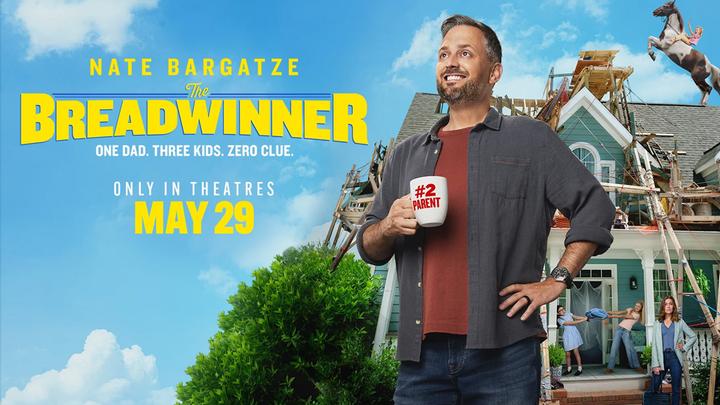
The Breadwinner comedian Nate Bargatze’s debut film, now in theaters — lives in that second category. It’s not a biblical epic. It doesn’t have an altar call. But it is built on the kind of values that faith communities have been begging Hollywood to reflect: commitment to family, self-sacrifice, a husband and wife who are genuinely for each other, and content so clean you can bring literally everyone in your family without a moment of awkwardness.


Who Is Nate Bargatze, and Why Does It Matter?

If you’ve somehow missed Nate Bargatze up to this point, here’s what you need to know. He’s a Nashville-born, Southern-raised Christian comedian who has spent over twenty years building one of the most remarkable careers in stand-up comedy, all without ever crossing a line your mom would be uncomfortable with. No crude jokes. No profanity. No shock value. Just genuinely funny storytelling about family life, marriage, and the everyday absurdity of being human.

His recent “Big Dumb Eyes” World Tour sold over two million tickets — more than Beyoncé’s Cowboy Carter Tour. He hosted the Primetime Emmy Awards. He has been the highest-grossing stand-up comedian in the country. And he did all of it clean.

He’s been asked about this over and over again throughout his career, and his answers are always the same. His faith shaped who he is. And he has always believed that the best room is one where everyone, grandma, the teenagers, the little kids — can all laugh together without anyone being embarrassed.

“I just want to make something that all of them can be in the room together,” he’s said. He considers clean, family-centered comedy his calling, not just a career choice, but something God put on his heart.

Now he’s brought that calling to the big screen. And he didn’t do it alone, The Breadwinner was co-produced by Wonder Project, a faith-based production company that partnered with Sony Pictures because they believed in exactly what this film represents. This movie was built from the ground up with faith-and-family values at the center.


What The Breadwinner Is About

The premise is simple and instantly relatable. Nate plays Nate Wilcox, a top-performing car salesman married to Katie (played by Mandy Moore), who runs their household and raises their three daughters with what can only be described as superhuman competence.

Then Katie lands a deal on Shark Tank for her household invention. The catch? She has to travel overseas for two weeks to get production rolling. That means Nate — the breadwinner — is suddenly home alone with three daughters and absolutely no idea what he’s doing.

What follows is the kind of comedic chaos that feels completely real because it is real. Anyone who has ever watched their spouse handle everything and thought “I could do that”, only to discover forty-five minutes later that they absolutely cannot — will recognize themselves in this movie. Underneath all the laughs is a story about what it means to truly see and honor the people we love, to step up when it’s hard, and to realize that keeping a family together takes more grace than we usually give it credit for.

It’s rated PG. It runs 99 minutes. And yes, there’s a horse.


Here’s the Part Where We Have to Be Honest With Ourselves

Faith communities — and I say this with love, because I am one of you, have a habit of doing something that genuinely baffles Hollywood.

We complain about the content. Loudly. Passionately. We share articles about the moral decline of entertainment. We post on social media about how Hollywood has forgotten families. And then, when a movie comes along that gives us exactly what we’ve been asking for, we… wait for it to come to streaming.

We say we’ll catch it on Netflix.

We tell ourselves we’ll take the family “when things slow down.”

And then we wonder why there aren’t more movies like this being made.

Here’s the hard truth: Hollywood is not a values system. It’s a business. And businesses follow the money. When faith-and-family films succeed at the box office, whether they’re The Passion of the Christ or a PG comedy about a dad who can’t figure out laundry, studios greenlight more of them. When those same films under perform in theaters, the message Hollywood hears is clear: there’s no market for this.

The opening weekend box office is the vote that counts. Not the streaming numbers six months later. Not your positive review on social media. Ticket sales are what determine whether the next faith-and-family filmmaker gets a green light — or whether Hollywood goes back to making what it knows will sell.


What You Can Do Right Now

The Breadwinner is still in theaters. Here’s how you can make a difference:

Go this week. Every ticket still in the theatrical run matters. Take the kids, bring the grandparents, call your small group, text your neighbors. Make it a thing.

Talk about it. Share it from your church social media. Mention it in your newsletter. Tell people there is a genuinely funny, genuinely clean family movie in theaters right now — and that showing up is a statement.

Bring people who don’t usually go to “faith” movies. This isn’t a sermon on screen. It’s a hilarious, warm story about family — made by people of faith, for everyone. That’s actually the most powerful kind of outreach.

Think bigger. Every time you buy a ticket to a faith-and-family film — whether it’s a biblical epic or a PG comedy — you are casting a vote for the kind of content you want to exist. Use that vote.


The Bigger Picture

The faith-and-family film space is growing and it is growing because audiences have shown up. The Chosen exists because people showed up. I Can Only Imagine shocked Hollywood because people showed up. Every film that breaks through changes what gets green-lit next.

The Breadwinner is the current opportunity. It’s funny, it’s clean, it’s in theaters right now, and it was made by a man whose faith quietly shapes everything he does — backed by Wonder Project, a production company that exists specifically to bring more content like this into the world.

The least we can do is show up.

Go see it. Take your people. Laugh together. And let Hollywood know that faith-and-family audiences are real, we are paying attention, and we vote with our dollars.

Because if we don’t show up, they’ll stop making them. And then we’ll be right back to complaining about our streaming queues — with nobody to blame but ourselves.


The Breadwinner is rated PG and is now playing in theaters nationwide. Running time: 99 minutes. Co-produced by Wonder Project in partnership with Sony Pictures.

David Almgren – Two Pastors Popcorn and a Movie Podcast

Start, Finish, Repeat

What if winning at life isn’t about one big moment—but about showing up, finishing, and doing it all over again?

In NASCAR, championships aren’t won in a single race. Every driver knows that crossing the finish line consistently, race after race, week after week, is what separates champions from also-rans, (a racing term for competitors who finish the race but don’t place in the top spots). You might not win every race. You might not even come in second. But if you start, if you finish, and if you show up to do it again next week, the points accumulate. The momentum builds. And at the end of the season, the driver who finished the most races, not just the fastest ones, often holds the trophy.

The Apostle Paul understood this principle long before NASCAR existed.

“Do you not know that in a race all the runners run, but only one gets the prize? Run in such a way as to get the prize.” — 1 Corinthians 9:24

Paul wasn’t talking about sprinting to a single finish line. He was describing a life of sustained, faithful effort—race after race, season after season—running with intention toward something worth running for.


You’re Already at the Starting Line

Here’s the thing about a starting line: it doesn’t care who you were yesterday. It only asks one question, are you ready to run today?

Maybe you’ve had seasons where you felt like you were spinning your wheels. Going fast but getting nowhere. Or maybe life’s circumstances have felt like a wrong-way sign on the road, pointing you in a direction you never intended to go. The enemy of a great race isn’t always failure. Sometimes it’s simply running in the wrong direction with tremendous effort.

The good news is that God’s grace is the great reset. No matter how many wrong turns are behind you, the starting line is always available. Every single day is a new race. Every new season is a fresh opportunity to line up, rev the engine, and go.

Hebrews 12:1 puts it this way: “Let us throw off everything that hinders and the sin that so easily entangles, and let us run with perseverance the race marked out for us.”

The race is marked out. The course is set. The question is whether we’ll shed what’s slowing us down and step into it with intention, again and again and again.


Every Race Matters

Here’s where a lot of Christians get tripped up: they’re waiting for the big race. The defining moment. The dramatic turning point that will finally make their faith feel significant.

But championship seasons aren’t built on dramatic moments. They’re built on ordinary faithfulness. Showing up on a Tuesday when nobody’s watching. Finishing the hard conversation you started. Following through on the commitment you made when you felt inspired, even when the inspiration has long since faded.

Paul understood this intimately. “Therefore I do not run like someone running aimlessly; I do not fight like a boxer beating the air.” — 1 Corinthians 9:26

Every lap counts. Every race in your series matters. The marriage you’re faithfully investing in right now—that’s a race. The integrity you’re maintaining at work when it would be easier to cut corners, that’s a race. The forgiveness you’re choosing to extend when every emotion tells you not to, that’s a race. Finish it. Then line up and do it again.


Finishing Well Is the Goal

There is perhaps no more moving picture of a life well-raced than the Apostle Paul near the end of his life, writing from a prison cell with full confidence in how his story was ending.

“I have fought the good fight, I have finished the race, I have kept the faith. Now there is in store for me the crown of righteousness, which the Lord, the righteous Judge, will award to me on that day.” — 2 Timothy 4:7-8

He didn’t say he ran perfectly. He didn’t say he never crashed or never doubted. He said he finished. He kept the faith. And at the end of a long series of races, many of them brutal, many of them costly, he crossed the final line still holding on to the One who called him into the race in the first place.

That’s the goal. Not perfection. Completion. Faithful, consistent, never-quit completion.


The Prize That Doesn’t Rust

Here’s what separates this race from every other competition the world offers: the prize isn’t a trophy that tarnishes. It isn’t a title that fades. It isn’t applause from a crowd that will forget your name by next season.

“They do it to get a crown that will not last, but we do it to get a crown that will last forever.” — 1 Corinthians 9:25

Everything this world calls victory is temporary. Career success, financial achievement, public recognition, none of it goes with you. But every race you run in faith? That investment compounds into eternity. Every act of love. Every moment of faithfulness when no one was watching. Every time you chose God’s way over the easy way. It all counts. Every lap. Every finish line. Every time you lined up and did it again.

You are running toward something real.


Start, Finish, Repeat: Five Steps to Racing Well

So here’s the invitation: run. Not someday. Not when life calms down or when you feel more ready. Today. And then tomorrow. And then the day after that.

But what does that actually look like? Here are five practical ways to run your next race with intention:

One: Strip the weight. Look honestly at what you’re carrying that’s slowing you down. Is it unforgiveness? Fear? Shame about your past? Name it, set it aside, and run lighter. You can’t finish races carrying baggage that doesn’t belong to you.

Two: Know your lane. Stop comparing your race to someone else’s. God didn’t call you to run someone else’s course. Your lane is unique, and trying to run in someone else’s will only trip you up. Run your race. Finish your race.

Three: Find your pit crew. You were not meant to race alone. Surround yourself with people who believe in the prize you’re running toward—people who will speak truth when you’re tempted to quit and remind you of the finish line when the race gets long. That’s your church, your small group, your closest friends in faith.

Four: Fix your eyes forward. Not on the obstacles behind you. Not on the runners around you. Eyes on Jesus. Eyes on the prize. Every time your gaze drifts—and it will—redirect it back to what you’re running toward, not what you’re running from.

Five: Line up again tomorrow. This is the one that separates champions from quitters. When the race is done—whether you finished strong or barely limped across the line—show up again. Start again. The series isn’t over. The points are still accumulating. The season isn’t finished until God says it’s finished.

The crowd of witnesses is cheering. The course is marked. The prize is waiting.

And the God who called you into this race? He’s not watching from the grandstand. He’s running with you.

Start. Finish. Repeat.

David Almgren – Two Pastors, Popcorn and a Movie Podcast


The Discipline of Excellence: What Pistol Pete Maravich Teaches Us About Life

What does it take to reach the pinnacle of success?

That’s the question that haunts many of us. We look at the people who seem to have it all, the accolades, the money, the recognition, the standing ovations, and we wonder – is that enough? Does reaching the top of your field finally answer the deep questions we carry about meaning and purpose?

Pistol Pete Maravich spent his entire life answering that question. And his answer might surprise you.

Screenshot

The Foundation: A Father’s Vision

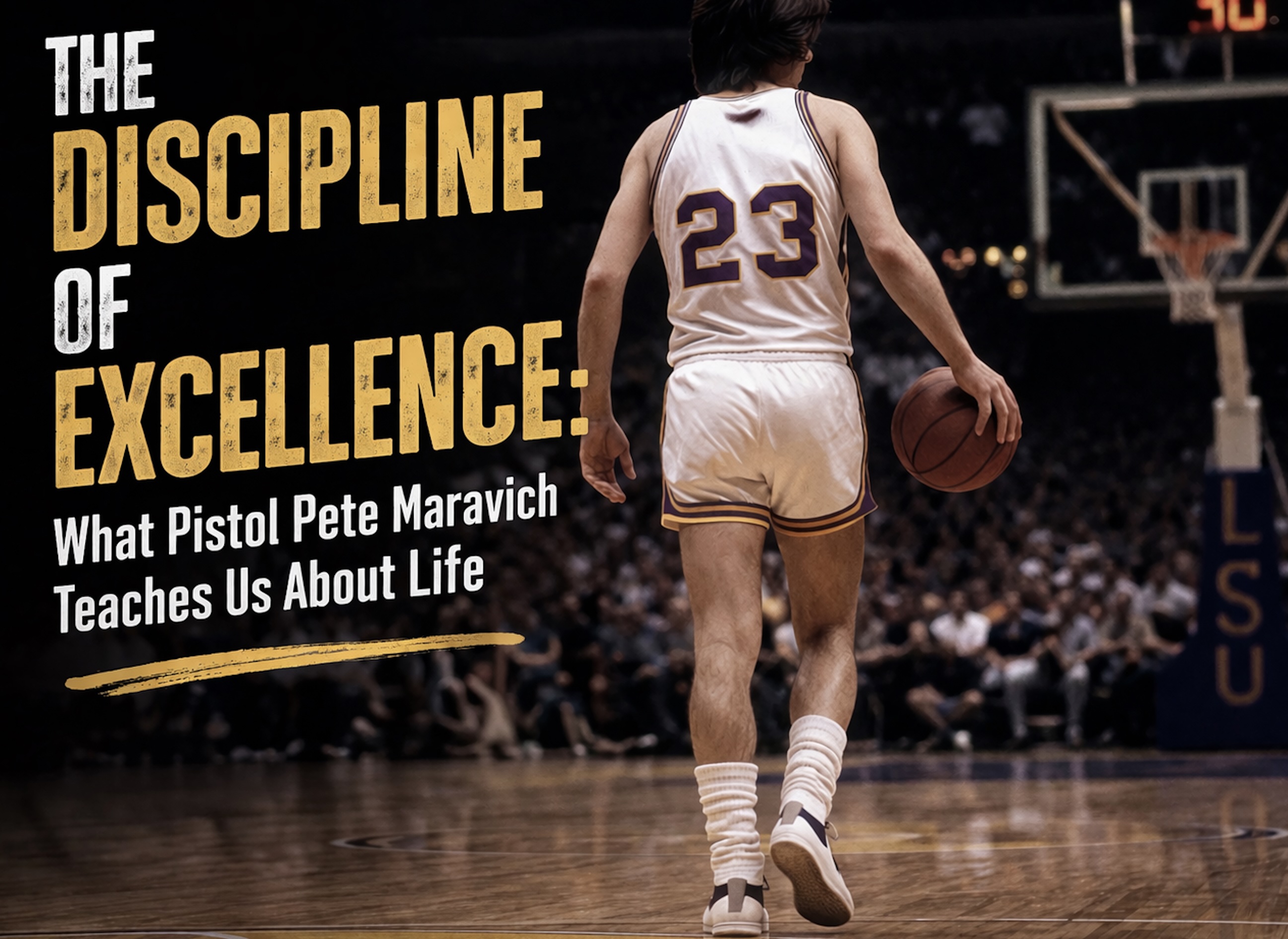
Before Pete Maravich became a legend, before the arenas filled with fans eager to watch him play, there was a father named Press Maravich who had a vision. He believed his son could be great, not eventually, not someday, but through relentless, daily discipline.

So Press did something unconventional. He made Pete practice everywhere. Not just on the court, but in the car. As they drove down the street, Pete would dribble a basketball out the window while his father drove. The ball would bounce off the pavement, the railroad tracks, the curb — anywhere and everywhere. It wasn’t glamorous. It wasn’t Instagram-worthy. It was just a father and son, committed to the small, daily practices that separate the good from the great.

This wasn’t punishment. This was love expressed through discipline. This was a father saying: “I believe in you so much that I’m going to push you to be better than you thought possible.”

The Long Road to Mastery

That childhood discipline carried Pete through his college years at Louisiana State University. By the time he finished his NCAA career, he had set a scoring record that would stand for decades — 3,667 points before the three-pointer was even introduced to the game. Let that sink in. In an era when the three-pointer didn’t exist, Pete Maravich was scoring at a rate that seemed almost impossible.

How? The same way his father had taught him. Through discipline. Through showing up. Through the railroad tracks and the car windows and the relentless commitment to getting one percent better every single day.

His peers knew it. Larry Bird, one of the greatest shooters ever to play the game, said that Pistol Pete was “one of the truly great players that could fill an arena.” Pat Riley, the legendary coach, said Pete was “the original. He was the best ball handler I ever saw. Ever.” These weren’t casual compliments. These were tributes from people who understood excellence because they pursued it themselves.

The Peak: Success, But at What Cost?

Pete Maravich made it to the NBA. He became an All-Star. He won scoring titles. He was one of the highest-paid rookies in the history of professional basketball. By every worldly measure, he had succeeded. He had climbed the mountain and planted his flag at the summit.

But here’s where Pete’s story takes a turn that most success stories don’t.

Because despite all of that, despite the money, the fame, the accolades, the respect of his peers, something was still missing. There was still an emptiness that no championship could fill, no scoring record could satisfy, no standing ovation could quiet.

Jesus said it this way: “What good is it for someone to gain the whole world, yet forfeit their soul?” Pete Maravich had gained the world. And he was beginning to realize that the world, in all its glory and recognition, was not enough.

The Real Turning Point

It wasn’t until later in his life that Pete Maravich found what he was actually looking for. He became a Christian. And when he did, everything came into focus. The discipline he had learned from his father, the relentless pursuit of excellence, the commitment to daily practice, the willingness to show up even when no one was watching, suddenly had a new direction. It had a new purpose. It had a soul.

Pete spent his later years speaking about his faith, about the emptiness of worldly success, about the fulfillment that only comes from a relationship with God. He went from playing to packed arenas to speaking in churches. He went from chasing scoring records to chasing something infinitely more valuable: meaning, purpose, and peace.

The Bridge: From Basketball to the Spiritual Life

Here’s what Pete Maravich’s life teaches us: Excellence is not bad. Discipline is not wrong. The pursuit of mastery in your field, whether that’s basketball or business or art or ministry, is noble and good.

But excellence in one area of life, without excellence in the spiritual life, leaves you empty.

Think about the discipline Pete learned from his father. Dribbling out the car window. Practicing when no one was watching. Showing up day after day after day. Getting marginally better. That’s not a basketball principle. That’s a life principle.

The same discipline that made Pete Maravich the greatest scorer in NCAA history can make you spiritually mature. The same commitment to daily practice that filled arenas can fill your soul. The same willingness to show up when it’s hard, when it’s not glamorous, when no one is watching, that’s what builds a life of genuine faith and purpose.

The Question Answered

So back to the question we started with: What does it take to reach the pinnacle of success?

Pete Maravich would tell you that reaching the pinnacle of your field is wonderful. Go for it. Practice like your life depends on it. Be disciplined. Be excellent. Be great.

But don’t stop there.

Because the real pinnacle, the real success that actually satisfies is found not in what the world can give you, but in what God offers. It’s found in discipline applied not just to your craft, but to your spiritual life. It’s found in showing up, day after day, to pursue excellence in knowing God, in growing in faith, in becoming the person He created you to be.

Pete Maravich learned to dribble a basketball out a car window. But the greater lesson his life teaches us is this: discipline the soul the way you discipline the body. Practice faith the way you practice your craft. Show up for your spiritual life the way you show up for the things the world celebrates.

Because in the end, that’s the only success that lasts.

David Almgren – Two Pastors, Popcorn and a Movie Podcast

Standing Against the World: A Film for Faith, Family, and the Fight for Truth

Faith isn’t just something we whisper about in quiet moments, it’s something worth standing up for in a culture that often questions everything we hold dear. That’s exactly the journey Standing Against the World invites us to take.

Beginning February 11, 2026, Standing Against the World will be streaming on FaithAndFamilyFlicks.com, bringing a powerful message to families, churches, ministries, and anyone wrestling with the big questions of faith and truth.


🎬 More Than a Film — It’s a Call to Courage

At its core, Standing Against the World isn’t just a documentary, it’s a faith mission on screen. Hosted by acclaimed actor and producer Kevin Sorbo and scholar Professor John Lennox, the film travels to universities and even to Israel to explore one of the biggest challenges facing believers today: how do we defend the Christian faith with both heart and reason?

The film tackles a sobering reality: many young adults today are turning away from biblical truth, citing evolution and skepticism as reasons to doubt the reliability of Scripture. This film doesn’t shy away from that conversation, it confronts it head-on.

In exploring the evidence for faith, from science to history, Kevin and Professor Lennox dig into real questions people are asking, inviting viewers into a journey of discovery, not just belief.


🎤 Insights from My Interview with Kevin Sorbo

When we sat down with Kevin for Two Pastors, Popcorn and a Movie Podcast, what stood out most wasn’t just his Hollywood background, it was his heart for people, especially younger generations.

Kevin shared how important it is not just to know what you believe, but to understand why you believe and to be equipped to share that with others. He spoke passionately about courage, conviction, and the need for Christians to engage thoughtfully with culture rather than retreat from it.

He talked about how meaningful it has been to work on projects that change lives, not just entertain. For Kevin, films like Standing Against the World are a way of carrying hope into spaces where people are wrestling with doubt, confusion, or simply curiosity.


🌍 Why This Film Matters Today

In an era where faith is often marginalized or misunderstood, Standing Against the World stands as a reminder that belief is neither blind nor outdated, it’s thoughtful, rooted in evidence, and deeply relevant.

This isn’t a film only for theologians or scholars. It’s a resource for:

  • Parents wanting to talk with their kids about faith
  • Church groups exploring apologetics
  • Friends curious about the relationship between science and Scripture
  • Anyone searching for meaning in a complex world

And because it’s now available on FaithAndFamilyFlicks.com starting February 11, you can watch it wherever your family gathers, whether that’s the living room, small group night, or youth group discussion.


📌 Stream It With Purpose

Films have the power to open hearts and spark conversation, but Standing Against the World goes beyond entertainment. It’s a tool, a conversation starter, and an invitation to explore faith with confidence.

We hope you’ll watch it, discuss it, and use it to help equip your family and community with the courage to stand firm, even when the world pushes back.

📅 Starts Streaming on https://faithandfamilyflicks.com/ — February 11, 2026

Dave Almgren – Two Pastors, Popcorn and a Movie Podcast


When Love Costs Something

Sometimes the most powerful stories are the ones told without words.

Forevergreen is a remarkable animated short film — brought to life by over 200 artists who donated their time and talent over five years — that tells its entire story without dialogue. It’s a visual and emotional journey about an orphaned bear cub who finds a home with a fatherly evergreen tree, only to be drawn away by temptation and danger before ultimately facing the choice of whether to return.

The film has captivated audiences at festivals around the world and is even nominated for an Academy Award® for Best Animated Short Film, a testament to its depth, artistry, and emotional resonance.

But beneath the handcrafted beauty and heart-tugging narrative lies something even more profound — a reflection of the mystery and cost of true love.


From Screen to Heart: Seeing Real Love in a Story

At first glance, Forevergreen may seem like a simple tale of friendship between a bear and a tree. But the deeper you watch, the more you realize this story isn’t just about nature — it’s about relationship, separation, consequence, and redemption.

The evergreen gives the bear a home and teaches it how to survive. But when the cub is tempted by easy rewards (symbolized in the film by trash and junk), it wanders into danger. Left to face the consequences of its choices, the bear must come to terms with what it has lost — and what it risks losing forever.

This narrative reflects something familiar to all of us: the struggle between what is easy and what is right, between temptation and wisdom, between self-interest and love.

“Forevergreen takes the powerfully moving truth of divine love and couches it in such an entertaining and emotional way…”
— Review quoted on the official film site.


True Love Is a Choice, Not Just a Feeling

Everyday life gives us countless echoes of the same theme.

  • A parent sacrificing sleep and personal plans to care for a sick child
  • A firefighter running into danger to rescue strangers
  • A friend showing up when it would be easier to stay away

These moments may be small and unseen, but they all share something important: love is not simply felt — it is chosen.

Sacrificial love requires us to deny ourselves, to face discomfort, to choose someone else’s well-being over our own convenience. That’s why these quiet acts resonate so deeply within us.


The Perfect Example: Jesus, the Sacrificial Love

All of the moments of love we see on screen or in everyday life point to a deeper truth — a love that is not learned from a script or born out of convenience, but lived out at a cost.

Jesus of Nazareth described this kind of love in the clearest terms recorded in Scripture:

“Greater love has no one than this: to lay down one’s life for one’s friends.”John 15:13

He didn’t just speak these words — He embodied them. At the cross, Jesus willingly laid down His life not for perfect people, but for flawed humanity. He chose sacrifice so that we might be restored, forgiven, and known. His was not a love of comfort — it was a love of cost.


The Moment Everything Became Clear

As Forevergreen unfolds, the story becomes more than just a charming animated journey — it becomes a mirror. It asks us:

  • What do we chase?
  • Who do we turn to when we are in danger?
  • What does love cost us — and what cost are we willing to pay?

And in that reflection, we see the truth Jesus taught us — that love is most deeply revealed not in ease, but in laying down what we hold most dear.

**There truly is…
no greater love.


Reflection & Prayer

Think about this:
Who in your life is God asking you to love sacrificially today?

Prayer:
Lord, help us to see love not as a feeling but as a choice. Teach us to lay down our lives in small ways that reflect Your great sacrifice for us. Give us courage to choose love over ease, and selflessness over comfort. Amen.

David Almgren – Two Pastors, Popcorn and a Movie Podcast and FaithandFamilyFilms.Com

Unfinished Business: The Inspiring True Story of Mike Flynt and The Senior

The Senior is more than just a sports film — it’s a powerful testament to courage, redemption, and the idea that it’s never too late to finish what life started. The movie tells the true story of Mike Flynt, a man who chased an unfinished dream nearly 40 years after it began.

Who Is Mike Flynt?

Mike Flynt was a standout high school linebacker in Odessa, Texas — part of the Permian High School team that won the state championship in 1965. He went on to play linebacker at Sul Ross State University and served as team captain, but his college football career ended abruptly before his senior season due to off-field trouble and disciplinary issues. That loss weighed on him for decades.

The Comeback at 59

In 2007, at 59 years old, Flynt did something almost no one believed he would: he returned to Sul Ross State to finish his college football career. A chance conversation with old teammates at a reunion challenged him to act on his regrets. After confirming he was still technically eligible, he walked on to the team, becoming one of the oldest college football players in NCAA history.

Instead of glory, his comeback was about redemption, grit, and purpose — proving age is no barrier to pursuing unfinished dreams.

From Real Life to the Big Screen

The film The Senior, directed by Rod Lurie and starring Michael Chiklis as Mike Flynt (with Mary Stuart Masterson as his wife Eileen), dramatizes this remarkable journey. At its heart, the story isn’t just about football — it’s about integrity, reconciliation, and family (themes that echo strongly if you watch the video about Mike’s story).

Through both heart-pounding gridiron scenes and quieter, emotional moments, The Senior invites audiences to reflect on:

  • What we would do for a second chance
  • The courage it takes to make peace with the past
  • How community, family, and faith can fuel a comeback

The tagline — it’s hard to believe it’s a true story — isn’t just a marketing line. It’s a challenge to every one of us: What dream have you set aside that’s still waiting to be pursued?

David Almgren – Two Pastors, Popcorn and a Movie Podcast

God. Family. Football. A Life Story of Faith, Mentorship, and Legacy

I first met Pastor Denny Duron back in the 1990s at youth retreats in Oregon. Even then, long before God. Family. Football. existed on screens, there was something unmistakable about his passion — not just for football but for each young life he ministered to. That early impression has only deepened now that the world gets to see his story unfold on Amazon Freevee and Fox Nation.

From Quarterback to Pastor-Coach: A Life Built on Faith

Duron’s journey began on the football field long before there was a docu series. Born in 1952 in Texas, he was a standout quarterback at Louisiana Tech University, leading the Bulldogs to back-to-back Division II national championships in 1972 and 1973 and earning all-conference honors.

After a brief professional stint — including time in the World Football League and signing with the Washington Redskins — God’s calling took him out of the limelight and into ministry. It was that same sense of calling that later brought him back into football, but with a renewed purpose: using the game as a platform to mentor young men in faith, character, and life beyond the field.

Duron founded the football program at Evangel Christian Academy in Shreveport, Louisiana, and over decades the Eagles became a powerhouse — with numerous state championships and recognition as one of the nation’s top high school programs.

Today he wears many hats — pastor of Shreveport Community Church, chancellor of Evangel Christian Academy, coach, author, and communicator of faith — yet his message remains consistent: God first, family second, and football third.

The Series: Real Lives, Real Faith

God. Family. Football. premiered on Amazon Freevee in September 2023 and has since gained new life on Fox Nation, where Season 2 and beyond continue to follow the Eagles’ journey.

Unlike typical sports documentaries, this series isn’t just about wins and losses. Centered on the 2022 season, it highlights:

  • The emotional and spiritual growth of players
  • Real struggles off the field — family issues, personal goals, and pressures of adolescence
  • The profound impact of mentorship and community support

Through the cameras, viewers see what I saw in person all those years ago — a coach who genuinely cares about who his players become, not just how they perform.

Season 3, which premiered in August 2025 on Fox Nation, introduces new storylines — including rising quarterback Peyton “Pop” Houston and Damari “DayDay” Drake’s moving journey through family reconciliation — reinforcing that this isn’t just about football, but life’s victories and setbacks.

Why This Story Matters

What sets God. Family. Football. apart is its heart. Yes, there are incredible athletic moments and dramatic Friday night lights. But at its core is a message about faith-first living — a principle I witnessed firsthand from Pastor Duron decades ago. He’s not just coaching players. He’s shaping character. He’s modeling resilience. He’s pointing to a purpose bigger than any scoreboard.

And that’s what keeps audiences coming back season after season. Viewers resonate with the idea that football is real, but faith and family are deeper still.

David Almgren – Two Pastors, Popcorn and a Movie Podcast